
For millions of American women entering their 60s, 70s, and beyond, the question isn’t just how long will I live? — it’s how well will I live?
Now, new research on muscle strength longevity women suggests the answer may be simpler than we thought: maintaining muscular strength could significantly reduce the risk of early death.
A study published on 13 February 2026 in JAMA Network Open found that older women with greater muscular strength had a notably lower risk of mortality compared to those with weaker strength levels. The research examined women aged 63 to 99, offering one of the most comprehensive looks yet at strength and long-term survival.
👉 Read the official study here:
https://jamanetwork.com/journals/jamanetworkopen
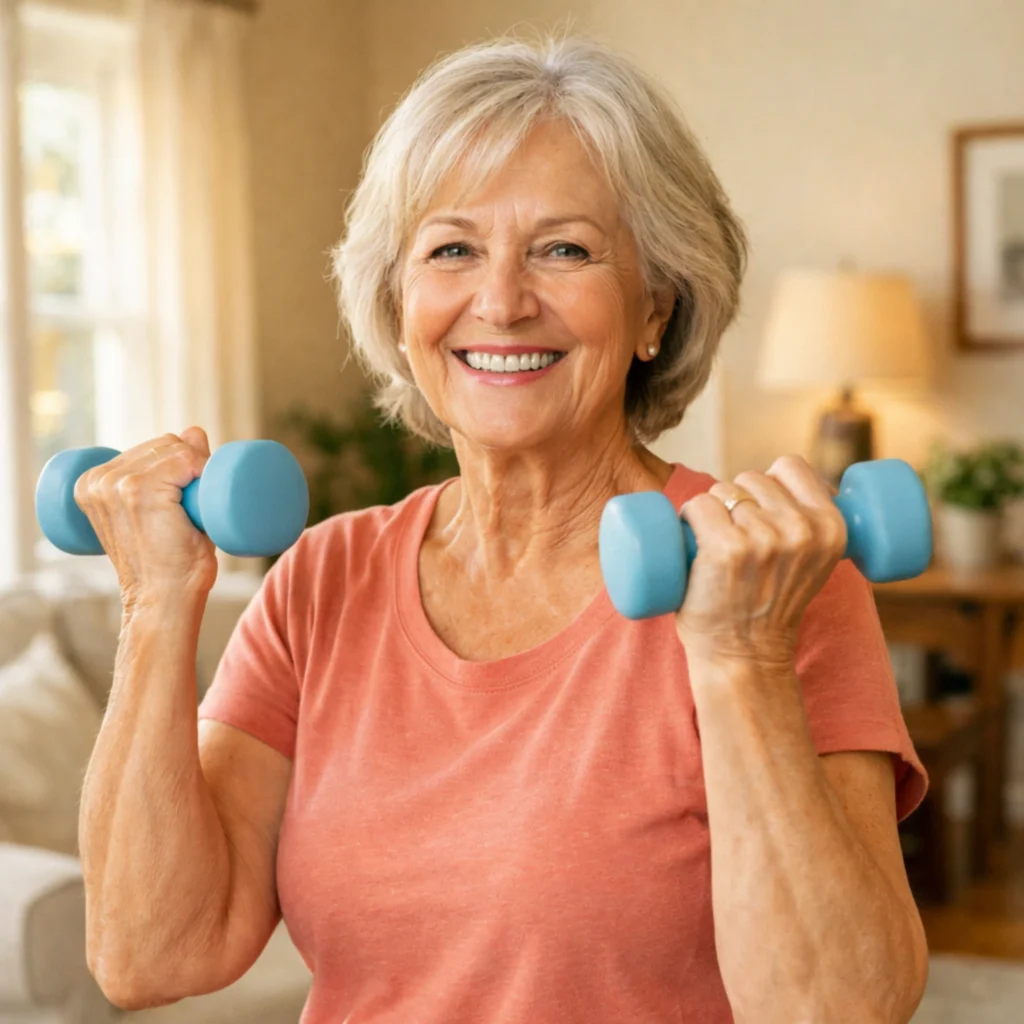
What the Study Found About Muscle Strength Longevity Women
Researchers followed thousands of older women and measured muscular strength using standardized physical performance tests. Even after adjusting for age, body weight, health conditions, and physical activity levels, the results were striking:
- Women with higher muscle strength had significantly lower mortality risk
- The protective effect remained consistent across different age groups
- Strength appeared to matter independently from general activity levels
In other words, it wasn’t just about moving more. It was about being stronger.
This finding shifts the conversation from “stay active” to something more specific: build and maintain muscle strength.
Why Muscle Strength Matters More Than You Think
When many Americans think of aging health, they focus on heart disease, cholesterol, or blood pressure. But muscle health often gets overlooked.
Yet muscle strength influences:
- Balance and fall prevention
- Independence in daily tasks
- Metabolic health
- Bone stability
- Recovery from illness
According to the Centers for Disease Control and Prevention, falls are a leading cause of injury among older adults in the United States.
CDC resource: https://www.cdc.gov/falls/
Stronger muscles mean better stability — and fewer life-threatening injuries.
In the UK, the NHS also emphasizes strength-based activity at least twice per week for older adults.
NHS guidance: https://www.nhs.uk/live-well/exercise/
The message on both sides of the Atlantic is clear: strength training is not just cosmetic — it’s protective.
Muscle Strength Longevity Women: A Cultural Shift in Aging
In the US, women over 60 now represent one of the fastest-growing population groups. More women are living into their 80s and 90s than ever before.
But longevity without strength can mean:
- Reduced mobility
- Increased hospitalizations
- Greater reliance on caregivers
The new muscle strength longevity women findings suggest something hopeful: building strength later in life still matters.
This is especially important because many women historically prioritized cardio workouts over resistance training. Walking groups, spin classes, and treadmill routines became staples — but lifting weights often felt intimidating or “not for older women.”
That narrative is rapidly changing.
Is It Too Late to Build Strength After 60?
Short answer: No.
Muscle tissue remains adaptable well into advanced age. Studies consistently show that resistance training can increase muscle mass and function even in people in their 70s, 80s, and 90s.
The latest findings from JAMA Network Open reinforce that maintaining muscle strength isn’t just about looking fit — it’s about survival.
This is powerful news for:
- Retirees wanting to stay independent
- Grandmothers keeping up with grandchildren
- Women recovering from illness
- Anyone concerned about aging well
What Counts as “Muscle Strength”?
Muscle strength doesn’t mean bodybuilding.
It includes:
- Carrying groceries
- Climbing stairs
- Standing up from a chair without assistance
- Lifting moderate household items
The CDC recommends strength activities involving all major muscle groups at least two days per week. That can include:
- Resistance bands
- Bodyweight exercises
- Light dumbbells
- Functional movements like squats and step-ups
Even modest gains in strength may translate into meaningful improvements in survival odds.
The Emotional Side of Muscle Strength Longevity Women
Behind the statistics is something deeply human: independence.
For many women, strength represents:
- Staying in their own home
- Avoiding assisted living
- Traveling freely
- Driving confidently
- Maintaining dignity
In both the US and UK, aging populations are redefining what later life looks like. Strength is increasingly viewed as a form of empowerment.
This is not about extreme workouts. It’s about resilience.
Why This Research Is Going Viral
The muscle strength longevity women study resonates because it feels actionable.
Unlike genetics, age, or past health history — muscle strength is modifiable.
It offers something rare in aging science: control.
That’s why conversations around strength training for older women are trending across social media fitness communities, retirement forums, and healthcare discussions.
People want practical steps they can take today.
Important Limitations
While the findings are compelling:
- The study shows association, not absolute causation
- Individual health conditions vary
- Exercise plans should be personalized
This article is educational and not medical advice. Always consult a qualified healthcare professional before beginning new exercise routines.
What Happens Next?
Expect updated public health messaging to increasingly emphasize strength over simple activity.
Both the CDC and NHS already include muscle-strengthening guidelines. With new data emerging, strength training may soon take center stage in aging recommendations.
For readers wanting practical, step-by-step strategies on building strength safely after 60, see our in-depth guide:
👉 Read the full Eviida Guidance article:
“How to Build Strength Safely After 60”
The Bottom Line
The new findings from JAMA Network Open offer a hopeful message:
Muscle strength longevity women is not just a research phrase — it may be a roadmap to living longer and better.
Stronger muscles could mean fewer falls.
Fewer falls could mean fewer hospitalizations.
And fewer hospitalizations could mean more years of independent living.
For millions of women in the US and UK, that’s not just news — that’s empowerment.
This content is for educational purposes only and does not constitute medical advice.
