Healthy SNAP Grocery Guide: How Families Can Eat Better on a Budget Without Feeling Restricted
The healthy SNAP grocery guide you’re about to read isn’t about judgment. It isn’t about politics. And it definitely isn’t about telling families what they “should” or “shouldn’t” eat.
It’s about something much simpler.
It’s about standing in a grocery store aisle — tired, on a budget, with hungry kids at home — and wanting to make the best choice possible.
Across America, the conversation around SNAP benefits and food restrictions has intensified, especially after renewed public health discussions published in JAMA. In our companion news article, we explained the broader debate around SNAP junk food restrictions and obesity policy:
👉 https://eviida.com/snap junk food restrictions/
But today is different.
Today is about you.
Whether policy changes happen or not, families still need practical tools. This healthy SNAP grocery guide is designed to give you control — not take it away.
Why a Healthy SNAP Grocery Guide Matters Right Now
If you’ve ever felt judged for what’s in your grocery cart, you’re not alone.
Food is deeply personal. It carries culture, comfort, stress, celebration, and survival.
Meanwhile, obesity rates remain high. According to the Centers for Disease Control and Prevention (CDC), over 40% of U.S. adults live with obesity. In the UK, the NHS reports similar concerns about rising weight-related health conditions.
But here’s what often gets missed:
Obesity isn’t caused by one food.
It’s influenced by cost, access, stress, sleep, time, marketing, and neighborhood design.
A healthy SNAP grocery guide doesn’t fix everything. But it can help families make small shifts that add up.
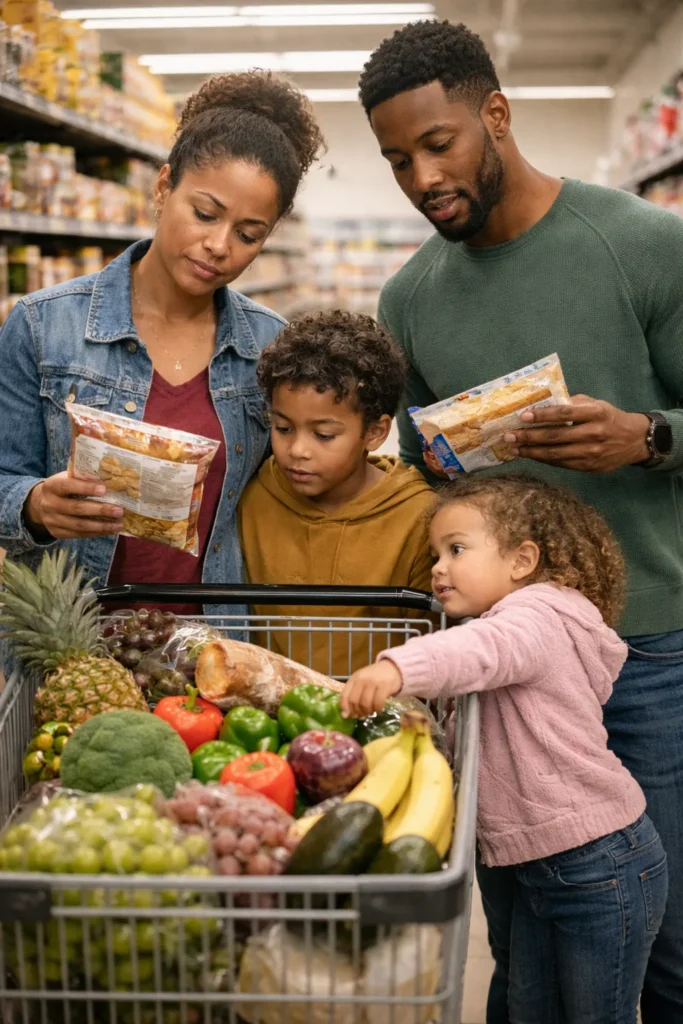
The Grocery Store Moment: A Real-Life Scenario
Imagine this.
You have $150 in SNAP benefits for the week.
You walk into a large supermarket.
You see:
- Soda on sale for 3-for-1
- Family-size frozen pizzas cheaper than fresh salmon
- A bag of chips that feeds five for under $3
Meanwhile:
- Fresh berries are expensive
- Lean meat costs more
- Organic products feel out of reach
This is the reality millions face.
A healthy SNAP grocery guide must work in real stores, with real prices, and real stress.
What a Healthy SNAP Grocery Guide Is (And Isn’t)
It IS:
- Practical
- Budget-aware
- Flexible
- Non-judgmental
It is NOT:
- A strict diet plan
- A moral lecture
- A guarantee of perfect health
The Science Behind Small Changes
Public health research discussed in JAMA highlights that reducing sugar-sweetened beverages is one of the most impactful dietary shifts for weight control.
The CDC consistently advises:
- Cutting back on added sugars
- Increasing fiber intake
- Choosing whole foods when possible
The NHS echoes similar guidance, encouraging reduced intake of ultra-processed foods.
The goal of this healthy SNAP grocery guide is to align with those principles — without increasing your grocery bill.
Step 1: Use the 70/30 Rule
A healthy SNAP grocery guide works best with balance.
Try this:
- 70% whole or minimally processed foods
- 30% convenience or comfort foods
Why?
Because restriction often backfires. Sustainability matters more than perfection.
Step 2: Master the Budget Produce Strategy
Fresh produce doesn’t have to mean expensive.
In this healthy SNAP grocery guide, here’s a smarter strategy:
Choose:
- Frozen vegetables (no sauce added)
- Seasonal fruits
- Store-brand produce
- Larger bags instead of pre-cut packs
Frozen vegetables are often:
- Cheaper
- Just as nutritious
- Less likely to spoil
That’s a win.
Step 3: Rethink Sugary Drinks Without Shock
Let’s talk honestly.
Soda is affordable, comforting, and heavily marketed.
But sugary beverages are strongly linked to weight gain and type 2 diabetes.
Instead of going cold turkey:
- Start with one fewer soda per day
- Replace with flavored sparkling water
- Try diluted fruit juice
- Keep water visible and accessible
This healthy SNAP grocery guide focuses on gradual shifts.
Step 4: Protein Without Breaking the Bank
Protein increases fullness and supports weight stability.
Budget-friendly options include:
- Beans
- Lentils
- Eggs
- Canned tuna
- Peanut butter
Meat can be stretched by:
- Mixing ground beef with lentils
- Using smaller portions with more vegetables
This healthy SNAP grocery guide emphasizes volume from fiber, not just calories.
Step 5: Understand Ultra-Processed Foods
Ultra-processed foods are:
- Engineered for taste
- Shelf-stable
- Often high in sugar, salt, and fat
They’re not “evil.” They’re convenient.
But over-reliance can crowd out nutrients.
A healthy SNAP grocery guide suggests:
Swap one ultra-processed snack for:
- Popcorn kernels
- Yogurt with fruit
- Oatmeal with peanut butter
Small swaps create long-term patterns.
Step 6: Plan Before You Shop
One of the most powerful tools in any healthy SNAP grocery guide is simple planning.
Before entering the store:
- Check your pantry
- Plan 4–5 core dinners
- Build a list
- Avoid shopping hungry
Impulse buying decreases when decisions are pre-made.
Step 7: Address Emotional Eating
Let’s be honest.
Financial stress affects food choices.
Long workdays, childcare pressure, and bills create fatigue.
Food becomes comfort.
That’s human.
A healthy SNAP grocery guide includes emotional awareness:
- Ask: Am I hungry or overwhelmed?
- Keep quick healthy snacks visible
- Create simple meals for stressful nights
Health isn’t just physical — it’s emotional.
What If SNAP Restrictions Happen?
If policy changes limit certain items, families may feel:
- Angry
- Controlled
- Confused
This healthy SNAP grocery guide remains useful regardless of policy.
Because empowerment doesn’t depend on rules.
It depends on knowledge.
The UK Perspective
In the UK, while there is no SNAP equivalent, conversations around sugar taxes and food marketing restrictions have grown.
The NHS encourages:
- Reduced sugary drink consumption
- Increased fruit and vegetable intake
- Balanced meals
The same principles apply across the Atlantic.
Honest Limitations
Let’s be real.
A healthy SNAP grocery guide cannot:
- Fix food deserts
- Change pricing structures
- Solve poverty
- Eliminate stress
Public health solutions require systemic change.
But individual habits still matter.
Even modest improvements can reduce long-term disease risk.
A Week Using This Healthy SNAP Grocery Guide (Example)
Sample dinner rotation:
Monday: Bean chili with frozen vegetables
Tuesday: Scrambled eggs, toast, sautéed spinach
Wednesday: Baked chicken thighs, rice, broccoli
Thursday: Lentil soup and whole-grain bread
Friday: Homemade pizza using whole wheat base and added vegetables
Affordable. Filling. Flexible.
Why This Isn’t About Blame
Low-income families did not create:
- Aggressive junk food marketing
- Subsidized corn syrup systems
- Ultra-processed food dominance
The system influences behavior.
This healthy SNAP grocery guide is about reclaiming small areas of control.
Long-Term Mindset Shift
Instead of asking:
“What can’t I buy?”
Ask:
“What helps my family feel better long term?”
Energy.
Mood.
Stability.
Less medical stress later.
If You’re Feeling Overwhelmed
Start with one change.
Just one.
- One less soda
- One more vegetable
- One planned dinner
Consistency beats intensity.
The Bigger Picture
The debate around SNAP restrictions reflects a national concern about obesity and chronic disease.
As covered in our news article:
👉 https://eviida.com/snap junk food restrictions/
Policy may evolve.
But families deserve practical support today.
Final Thoughts
A healthy SNAP grocery guide is not about perfection.
It’s about direction.
No grocery cart is perfect.
No week is perfect.
No family eats flawlessly.
But every small shift matters.
And you deserve tools — not criticism.
Educational Disclaimer
This content is for educational purposes only and does not constitute medical advice. Always consult a qualified healthcare professional for personal health concerns.
