
Smartphone Use During School Hours Linked to Lower Focus in New Study
A growing body of research is examining how everyday technology shapes the way young people learn. A new study suggests that smartphone use during school hours may be linked to reduced student focus and weaker cognitive control among teenagers.
The findings, published in JAMA Network Open, add to ongoing conversations in the United States and the United Kingdom about how smartphones influence classroom learning, attention, and study habits.
For parents, educators, and students themselves, the research highlights a simple but important question: what happens when smartphones compete with learning during the school day?
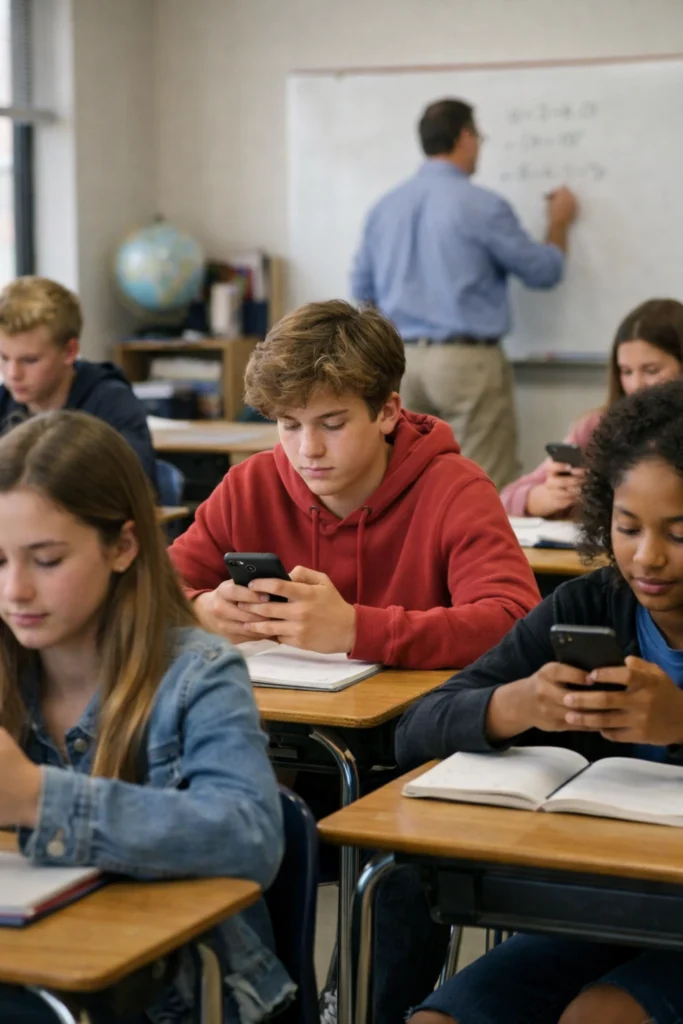
What the Study Found About Smartphone Use During School Hours
Researchers analyzing adolescent behavior found that frequent smartphone use during school hours was associated with lower levels of attention control and increased distraction among students.
The study, published in JAMA Network Open, examined patterns of digital behavior among school-age teenagers. Researchers focused on how often students interacted with their phones during the school day and how those habits related to measures of cognitive performance and self-regulation.
You can view the official research publication here:
https://jamanetwork.com/journals/jamanetworkopen
Students who reported higher levels of smartphone use during school hours tended to show more difficulty maintaining sustained focus during tasks that required concentration.
While the research does not claim that smartphones directly cause attention problems, the findings suggest that frequent digital interruptions may interfere with the brain’s ability to stay engaged in learning activities.
Why Smartphone Use During School Hours Matters for Learning
The teenage brain is still developing important skills related to focus, planning, and impulse control. These functions—often referred to as executive functions—play a key role in academic success.
When smartphone use during school hours becomes frequent, it can introduce repeated interruptions during lessons, homework, and classroom discussions.
Even brief distractions can reset a student’s attention, making it harder to return to the original task.
In real classrooms, this can look like:
• checking notifications during a lecture
• scrolling social media between assignments
• messaging friends while trying to study
Over time, these patterns may make it harder for students to practice sustained concentration.
According to guidance from the Centers for Disease Control and Prevention, healthy digital habits are an important part of adolescent wellbeing and learning.
https://www.cdc.gov
The Classroom Reality in the United States and the UK
Across the United States and the United Kingdom, smartphones are now a constant presence in students’ daily lives.
Many teenagers carry their phones everywhere—including classrooms.
Some schools allow phones for educational activities, while others have introduced restrictions to reduce distractions.
In recent years, several school districts in the US have experimented with:
• phone-free classrooms
• locked phone pouches during lessons
• limited phone access during school hours
Supporters of these policies argue they help protect learning time. Critics worry they may limit communication or digital learning opportunities.
The new research on smartphone use during school hours contributes evidence that educators and policymakers are increasingly considering.
Digital Distractions and the Developing Brain
Teenagers often switch between multiple digital activities quickly—messages, videos, notifications, and social media.
This rapid task-switching may create a pattern of fragmented attention.
Research on cognitive development suggests that constant switching can make it harder to practice deeper focus.
The National Health Service (NHS) also emphasizes the importance of balanced screen habits for young people.
https://www.nhs.uk
Digital devices themselves are not inherently harmful. In fact, smartphones can support learning when used intentionally.
But smartphone use during school hours can become problematic when it replaces sustained attention during lessons or study time.
Why Students Check Their Phones So Often
Understanding why students use phones during class is also important.
Teenagers report several reasons for frequent phone use during school hours:
• social connection with friends
• responding to notifications
• boredom during lessons
• habit or automatic checking
For many students, smartphones function as a primary social tool.
That means resisting the urge to check a phone during class can require self-control skills that are still developing.
What This Means for Parents
For parents, the conversation about smartphone use during school hours often begins at home.
Many families are already trying to balance the benefits of digital tools with concerns about distraction and screen time.
Parents may consider talking with teenagers about:
• when phones should be used during the school day
• how notifications affect concentration
• the importance of uninterrupted study time
Instead of focusing only on restrictions, experts often encourage building digital awareness and self-regulation.
Helping teenagers understand how attention works can empower them to manage their own habits.
What Schools Are Considering
Schools across the US and UK are exploring different strategies to manage smartphone use during school hours.
These include:
Phone-Free Class Periods
Some schools ask students to keep phones in bags or lockers during lessons.
Digital Responsibility Programs
Students learn about healthy phone habits and attention management.
Structured Technology Use
Phones are used only when they support specific learning activities.
Each approach aims to protect learning time while recognizing that smartphones are a permanent part of modern life.
A Growing Conversation About Student Focus
The research on smartphone use during school hours arrives at a time when educators are increasingly concerned about attention in the classroom.
Teachers often report that maintaining student focus has become more challenging in an era of constant digital stimulation.
At the same time, many educators recognize that technology can be a powerful educational tool when used appropriately.
The key question is not whether smartphones belong in modern life—but how they fit into the learning environment.
Practical Ideas Students Are Trying
Some students are already experimenting with ways to reduce digital distraction during the school day.
Simple habits include:
• turning off non-essential notifications
• placing phones out of reach during class
• using “focus mode” features on devices
• checking messages only during breaks
These small adjustments can help reduce the pull of constant digital alerts.
What Happens Next in the Research
Scientists continue to explore how digital habits influence learning, mental wellbeing, and attention.
Future research may examine:
• how different types of phone use affect learning
• whether classroom phone policies improve focus
• how digital habits change over time
Understanding these patterns could help schools and families create environments that support both technology use and effective learning.
The Bigger Picture
Smartphones have transformed how young people communicate, learn, and access information.
But the new findings suggest that smartphone use during school hours may also shape how students focus and engage with their studies.
For parents, teachers, and students, the takeaway may be simple:
Technology can be powerful—but attention remains one of the most important tools for learning.
Those interested in practical strategies for improving focus and balancing smartphone habits can explore our guidance article here:
Educational Note:
This article summarizes research findings for informational purposes only and should not be considered medical or psychological advice.
