
A quiet risk hiding in life-saving treatment
For millions of women, radiation therapy after breast cancer is not just routine—it’s life-saving. But a new 2026 study is raising fresh concerns about something many survivors never think about: left-sided breast radiation heart risk.
The research, published in JAMA Network Open, suggests that women treated for cancer in the left breast may face a higher long-term risk of heart disease compared to those treated on the right side.
It’s not a reason to panic—but it is a reason to pay attention.
What the new study found
According to the April 4, 2026 study (read here: https://jamanetwork.com/journals/jamanetworkopen/issue/9/4), researchers analyzed long-term health outcomes in breast cancer patients who received radiation therapy.
Key findings:
- Women who received radiation on the left side showed a higher incidence of cardiovascular disease over time
- The risk appeared gradual and long-term, not immediate
- Modern radiation techniques reduce risk—but do not eliminate it entirely
In simple terms: where the radiation is delivered matters—and the heart’s location plays a role.
Why left-sided radiation may affect the heart
To understand the left-sided breast radiation heart risk, you need to look at basic anatomy.
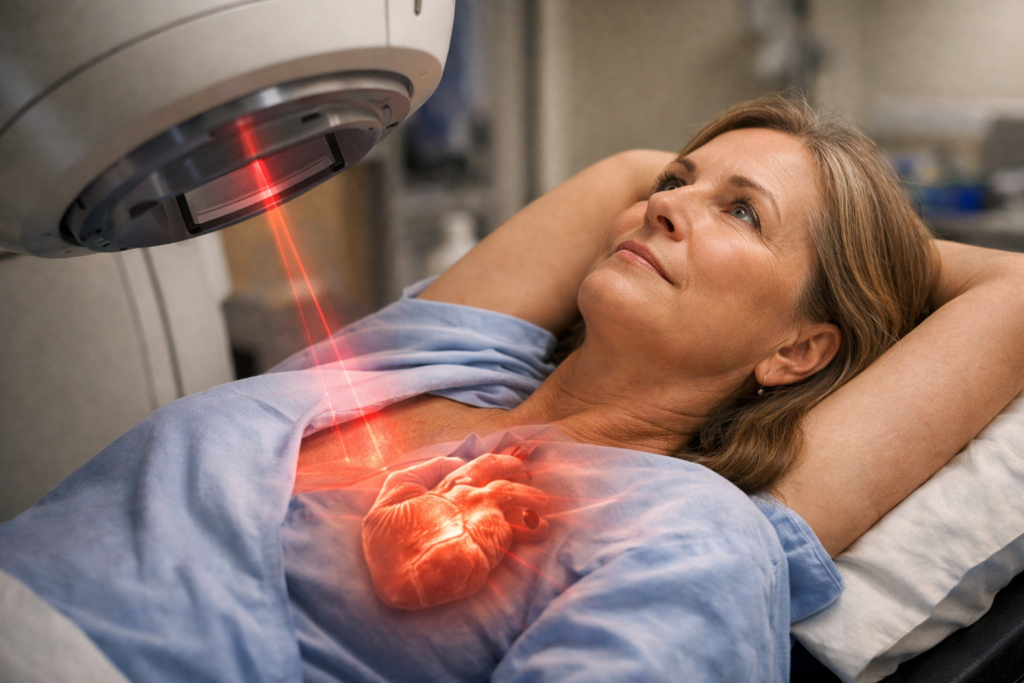
The heart sits slightly to the left side of the chest. When radiation is used to treat cancer in the left breast, small amounts of radiation can unintentionally reach the heart.
Over time, this may lead to:
- Damage to heart tissue
- Inflammation of blood vessels
- Increased risk of conditions like:
- Coronary artery disease
- Heart failure
- Arrhythmias
Even tiny exposures, repeated over treatment sessions, can add up.
Aren’t modern treatments safer now?
Yes—and that’s an important part of the story.
Today’s radiation therapy is far more precise than it was decades ago. Techniques like:
- Breath-hold methods
- Advanced imaging guidance
- Targeted radiation beams
…have significantly reduced heart exposure.
However, the study shows that left-sided breast radiation heart risk still exists—even with modern care.
That’s why long-term monitoring is becoming a bigger conversation in survivorship care.
Who is most at risk?
Not every patient faces the same level of risk. The study highlights several factors that may increase vulnerability:
Higher risk groups:
- Women treated at a younger age
- Those with existing heart risk factors, such as:
- High blood pressure
- Smoking history
- Diabetes
- Patients receiving higher radiation doses
- Those with longer survival time (more years for effects to appear)
This doesn’t mean radiation should be avoided—it means risk should be managed, not ignored.
What this means for breast cancer survivors
This is where the conversation becomes personal.
If you—or someone you love—has undergone radiation therapy, especially on the left side, this study doesn’t change the past. But it can shape the future.
Here’s what experts suggest:
- Regular heart check-ups after treatment
- Monitoring for symptoms like:
- Chest discomfort
- Shortness of breath
- Unusual fatigue
- Discussing cardiac screening with your doctor
Organizations like the Centers for Disease Control and Prevention and the National Health Service emphasize the importance of long-term follow-up care for cancer survivors.
A growing shift: Cancer survival → whole-body health
The good news? Survival rates for breast cancer are improving dramatically.
But as more women live longer after treatment, attention is shifting toward long-term quality of life—including heart health.
This study is part of a larger movement in medicine:
👉 Not just treat the cancer
👉 But protect the person long after it’s gone
What this means for you
If you’re reading this, you might be wondering:
“Should I be worried?”
Here’s the honest answer:
- Radiation therapy saves lives
- The increased heart risk is real—but manageable
- Awareness leads to prevention and early detection
The takeaway:
- Don’t skip follow-ups
- Don’t ignore heart health
- Don’t assume “treatment is over” means “risk is gone”
The bottom line
The new research highlights an important truth:
Left-sided breast radiation heart risk is a long-term consideration—not an immediate danger.
It’s not about fear.
It’s about informed care.
And for millions of survivors, that knowledge could make all the difference in the years ahead.
Continue your journey
If you want practical, step-by-step ways to protect your heart after treatment, read our full guidance here:
👉 https://eviida.com/how-to-protect-your-heart-after-breast-cancer-radiation/
Disclaimer: This article is for educational purposes only and is not medical advice. Always consult a qualified healthcare professional for personal medical guidance.
