
Why Research Supported Healthy Habits Matter More Than Ever
A few years ago, a close friend of mine did everything “right.” She followed trending diets, tried viral workouts, and downloaded every wellness app that promised transformation in 30 days. Nothing stuck. She felt tired, frustrated, and quietly blamed herself for failing.
The truth was simpler and more uncomfortable: she wasn’t failing. The advice she followed simply wasn’t grounded in evidence.
That’s why research supported healthy habits matter so deeply, especially in the United States, where burnout, chronic disease, and mental fatigue have become normal rather than exceptional. When habits are backed by research, they remove guesswork. They create trust. They work even when motivation fades.
This article isn’t about perfection or discipline. It’s about choosing habits that science has already tested, so you don’t have to gamble with your health.
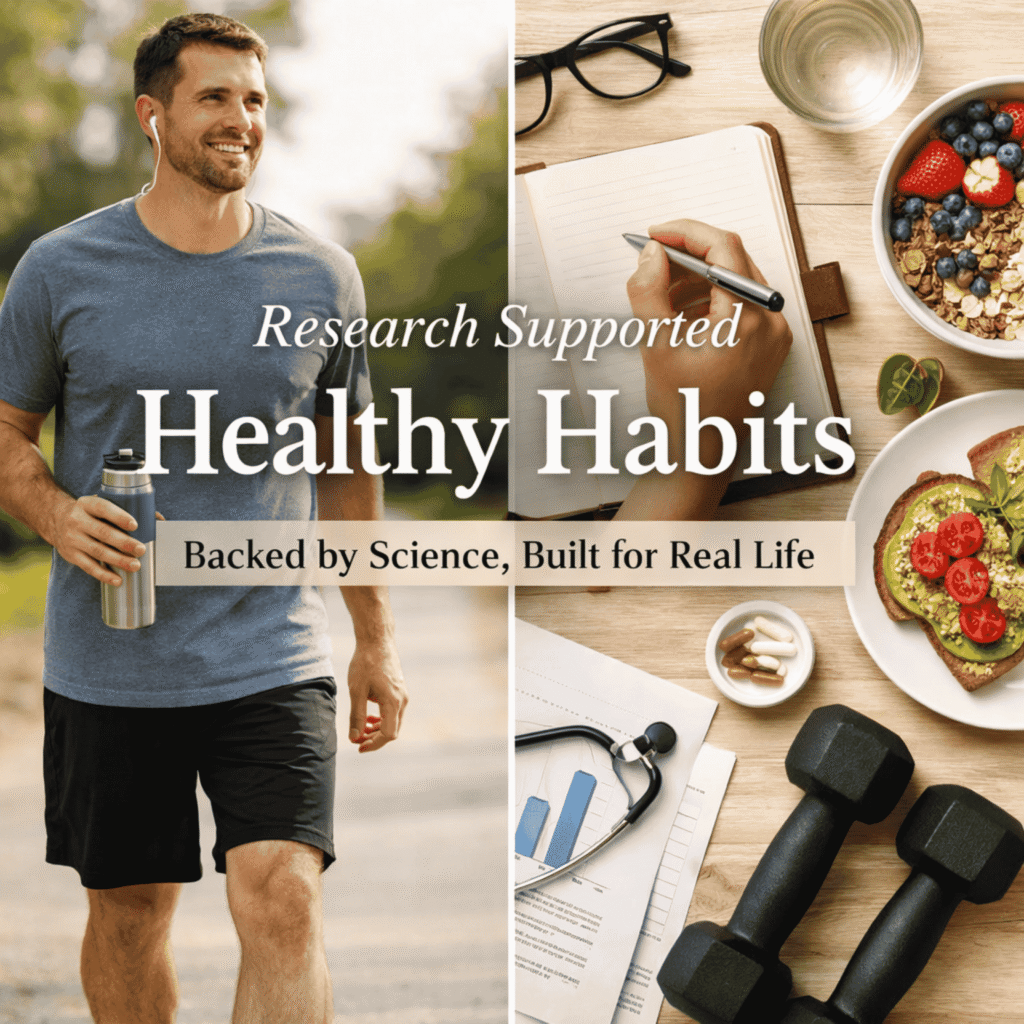
What Science Really Means by Research Supported Healthy Habits
In everyday conversation, “healthy habits” can mean almost anything. In research, the definition is much stricter.
Research supported healthy habits are behaviors that:
- Have been tested in peer-reviewed studies
- Show consistent benefits across large populations
- Improve measurable health outcomes like longevity, mental health, or disease risk
This matters because many popular wellness trends fail long-term studies. In contrast, habits supported by decades of research quietly improve lives without flashy promises.
In the U.S., institutions like the NIH, CDC, and Harvard School of Public Health repeatedly emphasize that small, repeatable behaviors have a far greater impact than extreme short-term changes.
The Science Behind Research Supported Healthy Habits and Longevity
Long-term health isn’t built through intensity. It’s built through consistency.
Large cohort studies following Americans over 20–40 years reveal a clear pattern: people who live longer and healthier lives don’t do extraordinary things. They do ordinary things consistently.
Research consistently links longer lifespan and better quality of life to:
- Regular movement instead of sedentary routines
- Predictable sleep schedules
- Balanced nutrition rather than restrictive dieting
- Stress regulation and social connection
These findings aren’t controversial. They’re repeated across populations, income levels, and age groups.
Research Supported Healthy Habits for Daily Physical Health
Walking as a Foundational Habit
Walking remains one of the most underestimated health tools in modern America. Research shows that 7,000–10,000 daily steps significantly reduce cardiovascular disease risk, improve insulin sensitivity, and lower all-cause mortality.
Unlike intense exercise programs, walking fits into real life. It doesn’t require a gym membership, special equipment, or perfect motivation. It simply requires showing up.
Strength Training Twice a Week
Loss of muscle mass begins as early as your 30s. Research supported routines consistently show that two days per week of resistance training preserve strength, protect joints, and improve metabolic health.
This isn’t about bodybuilding. It’s about maintaining independence, preventing injuries, and aging with confidence.
Research Supported Healthy Habits for Mental and Emotional Well-Being
Sleep Consistency Over Sleep Quantity
Most Americans focus on how long they sleep, not when. Research shows that irregular sleep schedules disrupt circadian rhythms, increase anxiety, and impair cognitive performance even if total sleep time is adequate.
Going to bed and waking up at the same time may sound boring. Science calls it powerful.
Stress Regulation Through Breath and Attention
Mindfulness isn’t a trend. It’s a clinically validated method of stress regulation. Studies show that even 5–10 minutes of slow breathing or focused attention daily lowers cortisol levels and improves emotional resilience.
This matters because chronic stress quietly worsens everything from heart disease to immune function.
The Nutrition Habits Science Actually Supports
Balanced Eating Over Diet Culture
Decades of nutrition research show that restrictive diets fail most people long-term. The most successful eating patterns emphasize balance rather than elimination.
Patterns repeatedly associated with better health outcomes include:
- High intake of vegetables, fruits, and whole grains
- Moderate protein from diverse sources
- Healthy fats such as olive oil and nuts
Consistency matters more than perfection. That’s why sustainable nutrition wins over willpower.
The Hidden Role of Social Connection in Health
One of the most surprising findings in health research is how deeply relationships affect physical outcomes.
Long-term studies show that loneliness increases mortality risk at levels comparable to smoking. Regular social interaction improves immune response, lowers depression rates, and even speeds recovery from illness.
In American culture, productivity often replaces connection. Science quietly warns us this trade-off is expensive.
How Research Supported Healthy Habits Become Sustainable
Habit Stacking and Behavioral Science
Research in behavioral psychology shows that habits stick when they’re attached to existing routines. Instead of adding something new, you anchor it to something familiar.
For example:
- Walking after dinner
- Stretching while watching TV
- Preparing vegetables while cooking protein
Sustainability isn’t about motivation. It’s about design.
Why Research Supported Healthy Habits Outperform Motivation
Motivation fluctuates. Stress happens. Life interrupts plans.
Research supported systems are resilient because they don’t depend on emotional peaks. They depend on structure, environment, and repetition.
This is why evidence-based habits quietly outperform extreme programs year after year.
A Realistic Path Forward
You don’t need to overhaul your life. You don’t need discipline you don’t have. You need habits that work even when energy is low.
Choose one behavior supported by research. Practice it consistently for 30 days. Let results build trust.
That’s how real health change happens in real American lives.
Final Thoughts on Research Supported Healthy Habits
Health doesn’t require heroics. It requires honesty, patience, and habits that respect human nature.
When you align your daily actions with what science already knows, progress stops feeling fragile. It becomes steady. Quiet. Reliable.
That’s the power of choosing evidence over trends, and structure over struggle.
FAQ Section
What are research supported healthy habits?
Research supported healthy habits are daily behaviors that have been studied in peer-reviewed research and shown to improve measurable health outcomes like energy, mood, sleep, heart health, and longevity.
Which research supported healthy habits work fastest?
The fastest “noticeable” habits for many people are consistent sleep and wake times, a daily walk (even 20–30 minutes), better hydration, and eating more protein and fiber at meals. Results can show up in energy and mood within days to a few weeks.
How many research supported healthy habits should I start with?
Start with one habit for 2–4 weeks. This improves consistency and makes it more likely you’ll keep it long-term. Add a second habit only after the first feels automatic.
Do research supported healthy habits replace medical advice?
No. Research supported healthy habits can improve overall wellness, but they do not diagnose or treat disease. If you have symptoms or medical conditions, check with a licensed healthcare professional.
What is the easiest research supported healthy habit for beginners?
Walking daily is often the easiest. It’s low impact, free, and strongly linked in research to better heart health, metabolic health, and mental well-being.
Are research supported healthy habits different from wellness trends?
Yes. Trends often rely on testimonials and marketing. Research supported healthy habits are backed by repeated studies, measurable outcomes, and long-term evidence.
How long until research supported healthy habits improve health?
Many people feel changes in sleep quality, mood, and energy within 2–4 weeks. Bigger outcomes like improved cholesterol, blood pressure, body composition, and endurance typically take 8–12+ weeks of consistent practice.
What are the best research supported healthy habits for weight loss?
For most people, the best evidence-based habits include regular walking, strength training, consistent sleep, higher protein and fiber intake, and reducing ultra-processed foods. Weight loss depends on overall energy balance and consistency.
