
Why a Healthy Foods List Still Matters in America
In the United States, food is everywhere—drive-thru windows on every corner, grocery aisles packed with colorful packaging, and “healthy” claims that feel impossible to decode. Most Americans don’t struggle because they lack willpower. They struggle because they’re overwhelmed.
A healthy foods list brings clarity.
It strips away trends, fear-based dieting, and unrealistic expectations, and replaces them with something practical: real foods you can recognize, buy, cook, and enjoy. This guide is designed for busy parents, working professionals, students, retirees—anyone who wants to eat better without turning food into a full-time job.
This is not about eating perfectly.
This is about eating consistently better.
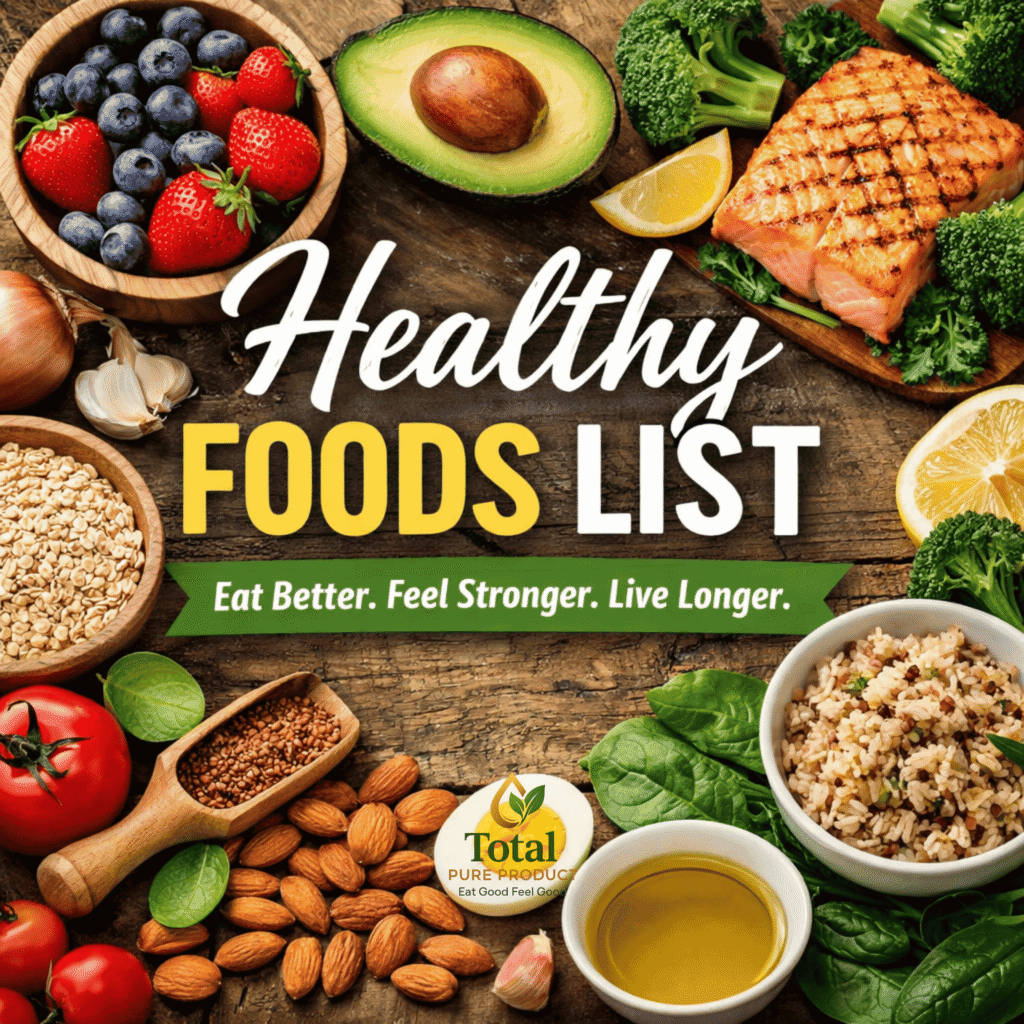
What “Healthy Foods” Actually Means (Without Diet Culture)
Healthy foods are not defined by labels like “low-fat,” “keto,” or “clean.” They’re defined by nutritional value and how they support your body over time.
At their foundation, healthy foods:
- Are close to their natural form
- Provide vitamins, minerals, fiber, protein, and healthy fats
- Help regulate blood sugar, appetite, and energy
- Support long-term heart, gut, and metabolic health
Healthy eating is not about cutting foods out—it’s about crowding better foods in.
How This Healthy Foods List Is Organized
To make this guide practical, foods are grouped in ways that match how Americans actually shop and cook:
- Fruits
- Vegetables
- Whole grains
- Protein foods
- Healthy fats
- Dairy and alternatives
- Nuts, seeds, and legumes
Later, you’ll also find goal-based lists (weight loss, heart health, gut health), budget tips, meal planning strategies, and a 7-day meal plan.
Fruits: Natural Sweetness with Real Benefits
Fruits are often misunderstood in modern diet culture. Yes, they contain sugar—but it’s natural sugar packaged with fiber, water, vitamins, and antioxidants.
Healthy Fruits List
- Apples
- Bananas
- Blueberries
- Strawberries
- Raspberries
- Oranges
- Grapefruit
- Grapes
- Pineapple
- Mango
- Kiwi
- Cherries
- Avocados
Why Fruits Belong in a Healthy Diet
- Fiber slows digestion and stabilizes blood sugar
- Antioxidants help reduce inflammation
- Natural sweetness can reduce cravings for processed desserts
Best Practices
- Choose whole fruits instead of juice
- Mix colors for broader nutrient coverage
- Frozen fruit is just as nutritious as fresh and often cheaper
Vegetables: The Cornerstone of Good Health
If there’s one food group that consistently improves health outcomes, it’s vegetables. They are low in calories but high in fiber, vitamins, minerals, and protective plant compounds.
Leafy Greens
- Spinach
- Kale
- Swiss chard
- Romaine
- Arugula
Cruciferous Vegetables
- Broccoli
- Cauliflower
- Brussels sprouts
- Cabbage
Root and Starchy Vegetables
- Sweet potatoes
- Potatoes
- Beets
- Carrots
Other Nutrient-Dense Vegetables
- Bell peppers
- Tomatoes
- Zucchini
- Cucumbers
- Mushrooms
- Onions
Why Vegetables Matter
Vegetables support digestion, heart health, immune function, and weight management. Eating a wide variety—especially different colors—maximizes benefits.
Whole Grains: Sustained Energy Without the Crash
Whole grains are often confused with refined carbohydrates. The difference is critical.
Whole grains retain all parts of the grain—the bran, germ, and endosperm—providing fiber, B vitamins, and minerals.
Healthy Whole Grains List
- Oats
- Brown rice
- Quinoa
- Whole wheat bread
- Barley
- Farro
- Bulgur
- Millet
Benefits of Whole Grains
- Improved digestion
- Better blood sugar control
- Increased fullness and energy stability
Smart Swaps
- White rice → brown rice or quinoa
- White bread → whole grain bread
- Sugary cereals → oats or whole grain cereal
Protein Foods: Building, Repairing, and Sustaining the Body
Protein is essential for muscle maintenance, immune health, hormones, and metabolism. Americans often get enough protein—but not always from the best sources.
Animal-Based Protein Sources
- Eggs
- Chicken breast
- Turkey
- Lean beef
- Salmon
- Tuna
- Sardines
- Greek yogurt
- Cottage cheese
Plant-Based Protein Sources
- Lentils
- Chickpeas
- Black beans
- Kidney beans
- Tofu
- Tempeh
- Edamame
How Much Protein Do You Need?
Most adults benefit from including protein at every meal to support satiety and blood sugar balance.
Healthy Fats: Essential for Brain and Heart Health
Fat is not the enemy. In fact, some fats are essential for survival.
Healthy Fat Sources
- Extra virgin olive oil
- Avocados
- Nuts (almonds, walnuts, pistachios)
- Seeds (chia, flax, pumpkin, sunflower)
- Fatty fish
Why Healthy Fats Matter
- Support brain function
- Help absorb fat-soluble vitamins
- Promote heart health
- Increase meal satisfaction
What to Limit
- Trans fats
- Highly processed seed oils
- Excess fried foods
Dairy and Dairy Alternatives
Dairy can be part of a healthy diet when chosen wisely.
Healthy Dairy Options
- Plain Greek yogurt
- Cottage cheese
- Milk (low-fat or whole, depending on tolerance)
- Kefir
Dairy-Free Alternatives
- Unsweetened almond milk
- Unsweetened soy milk
- Unsweetened oat milk
Avoid flavored versions with added sugar whenever possible.
Nuts, Seeds, and Legumes: Small Foods, Big Impact
These foods are nutritional powerhouses, offering fiber, protein, healthy fats, and minerals.
Healthy Options
- Almonds
- Walnuts
- Cashews
- Chia seeds
- Flaxseeds
- Lentils
- Split peas
They’re versatile, affordable, and easy to store—making them ideal staples.
Healthy Foods List for Weight Loss (Without Starvation)
Sustainable weight loss is about satiety, consistency, and metabolic balance—not extreme restriction.
Best Foods for Weight Loss
- Leafy greens
- Lean protein (chicken, fish, beans)
- Eggs
- Greek yogurt
- Berries
- Oats
- Sweet potatoes
Why These Foods Work
They provide volume, fiber, and protein that help control appetite naturally.
Healthy Foods List for Heart Health
Heart disease remains the leading cause of death in the U.S., but food plays a powerful preventive role.
Heart-Healthy Foods
- Fatty fish
- Oats
- Olive oil
- Nuts
- Beans
- Berries
- Leafy greens
These foods help manage cholesterol, blood pressure, and inflammation.
Healthy Foods List for Gut Health
Your gut microbiome affects digestion, immunity, mood, and even weight.
Gut-Friendly Foods
- Yogurt with live cultures
- Kefir
- Sauerkraut
- Kimchi
- Fiber-rich fruits and vegetables
- Whole grains
- Legumes
A diverse diet feeds diverse gut bacteria—key for resilience.
Healthy Foods for Busy Americans
Healthy eating doesn’t require hours in the kitchen.
Time-Saving Staples
- Frozen vegetables
- Canned beans
- Rotisserie chicken
- Pre-washed greens
- Eggs
- Oats
Simple meals are often the healthiest.
Healthy Foods on a Budget
Eating well is not reserved for the wealthy.
Budget-Friendly Healthy Foods
- Beans and lentils
- Oats
- Eggs
- Frozen fruits and vegetables
- Brown rice
- Cabbage and carrots
Planning meals and shopping with a list can significantly reduce food costs.
A Practical 7-Day Healthy Meal Plan
Day 1
Breakfast: Oatmeal with blueberries
Lunch: Grilled chicken salad
Dinner: Salmon, quinoa, broccoli
Day 2
Breakfast: Greek yogurt with fruit
Lunch: Lentil soup
Dinner: Turkey stir-fry with vegetables
Day 3
Breakfast: Eggs and whole grain toast
Lunch: Tuna salad
Dinner: Sweet potato, black beans, avocado
Day 4
Breakfast: Smoothie with spinach and banana
Lunch: Quinoa vegetable bowl
Dinner: Grilled chicken, brown rice, green beans
Day 5
Breakfast: Cottage cheese with fruit
Lunch: Chickpea salad
Dinner: Fish tacos with cabbage slaw
Day 6
Breakfast: Oatmeal with nuts
Lunch: Leftovers
Dinner: Turkey chili
Day 7
Breakfast: Scrambled eggs and fruit
Lunch: Vegetable soup
Dinner: Balanced plate of protein, grains, and greens
How to Use This Healthy Foods List in Real Life
Start small:
- Add one vegetable per meal
- Swap refined grains for whole grains
- Drink more water
Consistency beats perfection every time.
Common Healthy Eating Myths
“Healthy food is boring”
Flavor comes from herbs, spices, and cooking methods—not sugar.
“I have to give up my favorite foods”
Balance matters more than elimination.
“Healthy eating takes too much time”
Simple foods prepared consistently win.
Frequently Asked Questions (FAQ)
What is the healthiest food overall?
No single food does it all, but leafy greens, berries, legumes, and fatty fish consistently rank high.
How many healthy foods should I eat daily?
Aim for variety across food groups rather than counting foods.
Is organic food necessary?
Not required. Eating more fruits and vegetables—organic or not—is the priority.
Can healthy foods improve energy?
Yes. Many people notice improvements within one to two weeks.
Healthy Eating Is Built One Choice at a Time
A healthy foods list is not a rulebook. It’s a guide—a way to simplify decisions and reduce stress around eating.
When you focus on real foods, balanced meals, and consistency, health becomes sustainable, not overwhelming. And over time, those small choices add up to something powerful: a better quality of life.
