
The Question Most Americans Are Asking Right Now
It usually starts small. You’re standing in your kitchen, stirring coffee or tea, and you pause. Should you reach for the white sugar—or squeeze a little honey instead?
For years, we’ve been told honey is “natural” and sugar is “bad.” Grocery store shelves reinforce the idea. Wellness blogs repeat it. Friends swear they “switched to honey” and feel better.
But when it comes to your health, is honey really healthier than sugar—or is that just a comforting story we like to tell ourselves?
Let’s slow down, step away from the hype, and look at the facts—science-backed, practical, and honest.
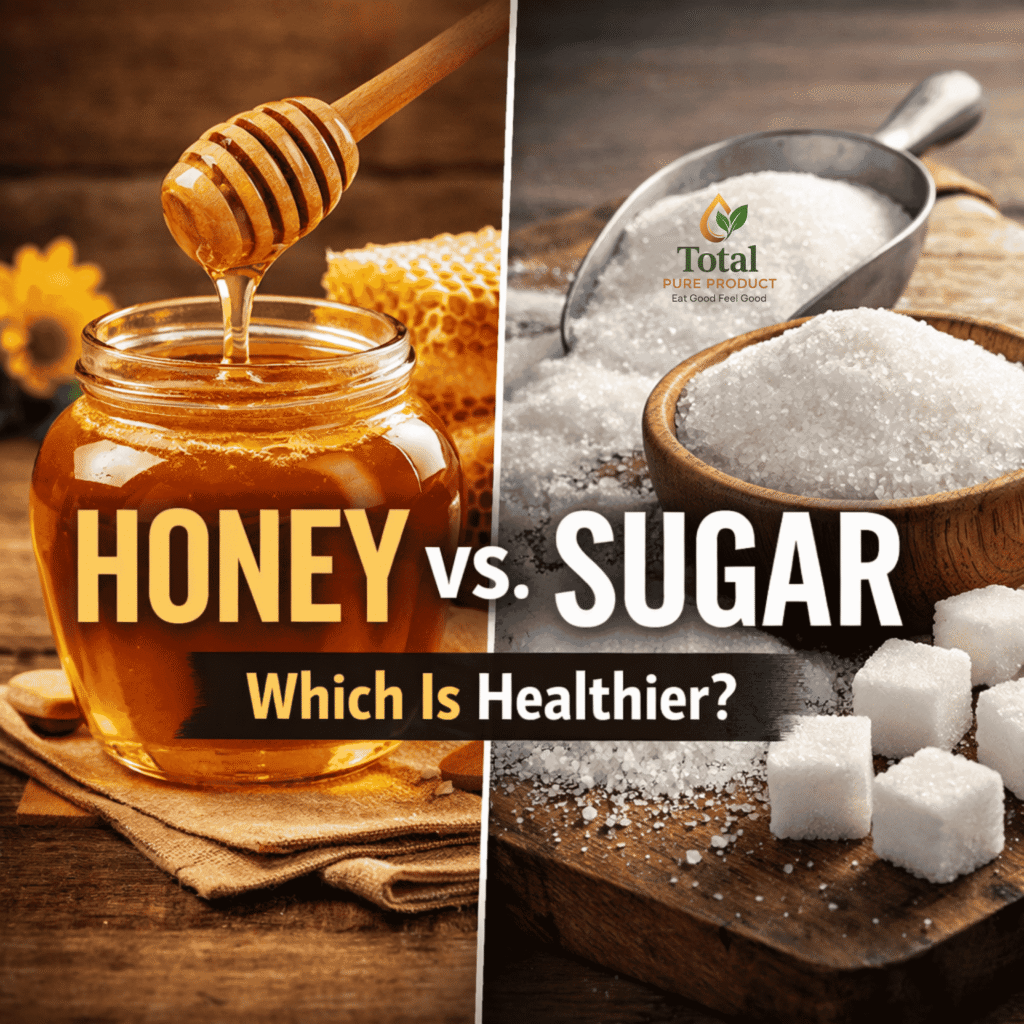
The Short Answer (If You’re in a Hurry)
Honey is slightly healthier than sugar—but only when used in moderation.
Honey contains trace nutrients and antioxidants that sugar does not. However, both raise blood sugar, both contain calories, and both can cause health problems if overused.
The real difference isn’t dramatic—but it is meaningful.
Now let’s unpack why.
What Exactly Are Sugar and Honey?
Before we compare them, it helps to understand what they actually are.
What Is White Sugar?
White table sugar (sucrose) is refined from sugarcane or sugar beets. During processing, everything except pure carbohydrate is stripped away.
- 100% empty calories
- No vitamins or minerals
- Rapidly absorbed by the body
It’s engineered for sweetness, shelf life, and consistency—not health.
What Is Honey?
Honey is made by bees from flower nectar. It’s minimally processed, especially when raw.
- Mostly natural sugars (fructose and glucose)
- Contains trace minerals, enzymes, and antioxidants
- Varies based on floral source and processing
Honey is still sugar—but it’s not just sugar.
Honey vs Sugar: Nutritional Comparison
Calories and Macronutrients
| Nutrient (1 Tbsp) | Honey | White Sugar |
|---|---|---|
| Calories | ~64 | ~49 |
| Total Sugar | ~17g | ~12.6g |
| Glycemic Index | ~55 | ~65 |
| Micronutrients | Small amounts | None |
Honey has slightly more calories, but it also delivers more nutritional value per spoonful.
Blood Sugar Impact: Which One Is Easier on Your Body?
Blood sugar spikes are one of the biggest health concerns tied to sweeteners.
Glycemic Index Explained Simply
The glycemic index (GI) measures how quickly food raises blood sugar.
- Sugar: High GI → fast spike
- Honey: Moderate GI → slower rise
Honey’s higher fructose content slows glucose absorption slightly. That means:
- Less dramatic blood sugar spikes
- Less stress on insulin (for most people)
However, “slower” does not mean “safe in unlimited amounts.”
Honey vs Sugar for Weight Loss
Many Americans switch to honey hoping it will help them lose weight.
The Reality
Honey is not a weight-loss food. But it can support better habits.
- Honey tastes sweeter, so people often use less
- It may reduce cravings compared to sugar
- It pairs better with whole foods (tea, oats, yogurt)
The Truth Most Articles Skip
If you replace sugar with honey but don’t reduce total calories, weight loss won’t happen.
Honey helps when it:
- Replaces processed sugar
- Is used sparingly
- Supports a cleaner overall diet
Honey vs Sugar for People with Diabetes
This is where things get serious.
Is Honey Safe for Diabetics?
Honey still raises blood sugar. It is not diabetes-safe by default.
However:
- Honey causes a slightly slower glucose rise than sugar
- Small amounts may be tolerated better by some people
What Doctors Usually Recommend
- Avoid both for daily use
- If used, measure carefully
- Monitor blood glucose closely
Honey is less harmful, not harmless.
Inflammation, Heart Health, and Immunity
Sugar and Inflammation
Excess refined sugar is linked to:
- Chronic inflammation
- Higher risk of heart disease
- Insulin resistance
Honey’s Advantage
Raw honey contains antioxidants that may:
- Reduce oxidative stress
- Support immune response
- Help gut health
These benefits are subtle—but real.
Natural vs Refined: Why Processing Matters
This is where honey clearly wins.
What Refining Does to Sugar
- Removes minerals
- Strips enzymes
- Creates a fast-digesting carbohydrate
Why Honey Is Different
Even after processing:
- Some enzymes remain
- Antioxidants persist
- Nutritional complexity stays intact
Honey behaves more like a food. Sugar behaves like a chemical.
How Much Honey or Sugar Is Safe Per Day?
The American Heart Association recommends:
- Men: no more than 36g added sugar/day
- Women: no more than 25g added sugar/day
Practical Translation
- 1 tablespoon honey ≈ 17g sugar
- 1 tablespoon sugar ≈ 13g sugar
That means 1 tablespoon per day is already pushing the limit.
Moderation is not optional—it’s essential.
Best Everyday Uses: Honey vs Sugar
Coffee and Tea
- Honey blends better with tea
- Sugar dissolves faster in coffee
- Honey adds flavor depth
Winner: Honey
Baking
- Sugar provides structure
- Honey changes texture and moisture
Winner: Sugar (for baking performance)
Kids and Family Use
- Honey offers trace nutrients
- Never give honey to infants under 1 year
Winner: Honey (for adults and older kids)
Common Myths About Honey and Sugar
“Honey Doesn’t Spike Blood Sugar”
False. It does—just slightly less.
“Raw Honey Has No Calories”
False. Calories remain calories.
“Sugar-Free Means Healthy”
Often false. Artificial sweeteners carry their own risks.
The Emotional Truth About Sweeteners
Most of us aren’t really asking which sweetener is healthier.
We’re asking:
- How can I enjoy food without hurting myself?
- How do I make better choices without feeling deprived?
Honey doesn’t solve everything—but it nudges you toward awareness.
And awareness changes habits.
Frequently Asked Questions
Is honey healthier than sugar for daily use?
Yes, slightly—but only in small amounts.
Can honey replace sugar completely?
In drinks and light cooking, yes. In baking, not always.
Does honey help with gut health?
Raw honey may support beneficial gut bacteria.
Is brown sugar healthier than honey?
No. Brown sugar is still refined sugar.
Is honey good for weight loss?
Only if it helps reduce overall sugar intake.
Final Verdict: Honey vs Sugar—Which Is Healthier?
If we’re being honest and scientific:
- Sugar: Pure calories, fast spikes, no benefits
- Honey: Slightly slower absorption, trace nutrients, modest health support
Honey is healthier than sugar—but it’s still sugar.
The smartest move isn’t choosing the “better” sweetener.
It’s needing sweetness less often in the first place.
When you do sweeten, let honey be a conscious choice—not a free pass.
That’s how real health happens.
