
Why “Natural” and “Evidence-Based” Matter More Than Ever
In the United States, health advice is everywhere—and much of it is confusing, contradictory, or driven by trends rather than truth. One week carbs are the enemy. The next week, fat is. Supplements promise miracles. Apps promise transformation in 30 days.
Yet behind the noise, real science quietly points to something far simpler.
Most long-term health outcomes are shaped not by quick fixes, but by natural, evidence-based lifestyle habits practiced consistently over time. These are not extreme. They don’t require perfection. And they work because the human body evolved to respond to them.
This article breaks down the science-backed lifestyle habits that actually improve health—physically, mentally, and emotionally—using research trusted by institutions like National Institutes of Health and Centers for Disease Control and Prevention. More importantly, it explains how real people can apply them in daily American life.
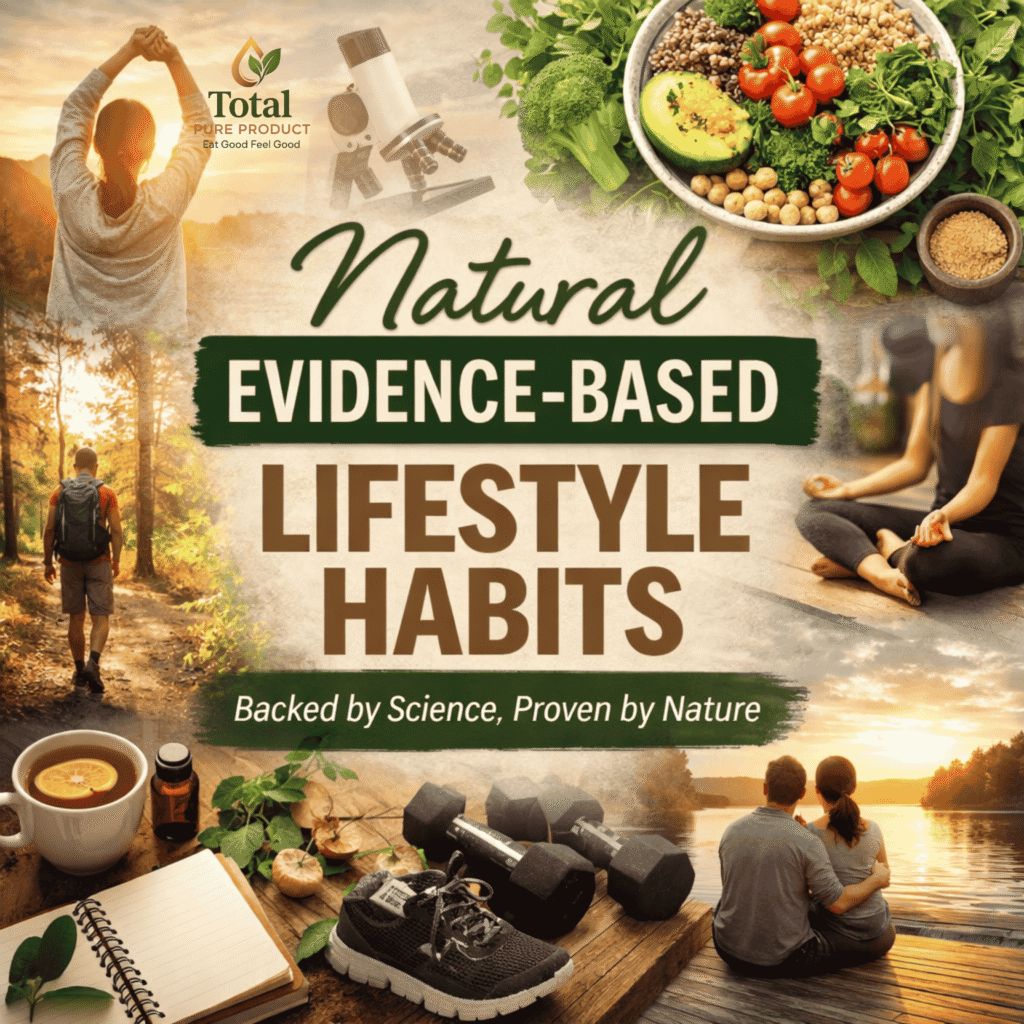
What Does “Evidence-Based Lifestyle Habits” Really Mean?
An evidence-based habit is one that meets three criteria:
It’s Supported by Scientific Research
The habit has been tested in controlled studies, long-term observational research, or meta-analyses—not just influencer anecdotes.
It Produces Consistent Results Across Populations
It works for different ages, genders, and backgrounds—not just elite athletes or biohackers.
It Improves Multiple Health Outcomes
True lifestyle habits don’t just help one marker. They improve sleep, energy, metabolic health, mental clarity, and longevity together.
When paired with natural behaviors—those aligned with human biology—the results become even stronger.
Sleep: The Most Powerful Natural Medicine We Ignore
Why Sleep Is Foundational to Every Other Habit
Sleep isn’t passive rest. It’s active repair.
During deep sleep, your body:
- Repairs tissues
- Regulates hormones
- Consolidates memory
- Strengthens immune response
Chronic sleep deprivation has been linked to obesity, heart disease, diabetes, depression, and early mortality.
What the Evidence Shows
Research consistently demonstrates that 7–9 hours of quality sleep is associated with:
- Lower cardiovascular risk
- Improved insulin sensitivity
- Better emotional regulation
- Reduced inflammation
Sleep is not optional recovery—it’s biological maintenance.
How to Apply This in Real Life
- Go to bed and wake up at the same time, even on weekends
- Reduce artificial light exposure after sunset
- Keep the bedroom cool, dark, and quiet
- Avoid caffeine after early afternoon
Sleep doesn’t need to be perfect. It needs to be protected.
Whole-Food Nutrition: Eating the Way the Body Recognizes
The Problem With Modern Diet Culture
Most Americans don’t eat too much—they eat too processed.
Highly refined foods overwhelm the body’s regulatory systems, making hunger cues unreliable and metabolic health fragile.
What Evidence-Based Nutrition Looks Like
Decades of research show that diets centered on whole, minimally processed foods consistently reduce disease risk.
This includes:
- Vegetables and fruits
- Whole grains
- Legumes
- Lean proteins
- Healthy fats from natural sources
No single “perfect” diet exists—but food quality consistently matters more than macros.
A Sustainable U.S.-Style Approach
- Build meals around plants, not packaging
- Aim for ingredient lists you can pronounce
- Eat slowly and without constant distraction
- Focus on consistency, not restriction
Nutrition works best when it fits real life—not when it fights it.
Daily Movement: The Antidote to a Sedentary Life
Why Exercise Doesn’t Have to Be Extreme
The human body evolved for movement, not sitting. Yet modern life removes it almost entirely.
You don’t need intense workouts to see benefits. Regular movement delivers most of the returns.
Science-Backed Benefits
Studies show that consistent physical activity:
- Reduces all-cause mortality
- Improves cardiovascular health
- Enhances mood and cognitive function
- Preserves muscle and bone density
Even modest daily movement dramatically lowers disease risk.
Practical Movement Strategies
- Walk after meals
- Use stairs whenever possible
- Include resistance training 2–3 times per week
- Stretch or move every hour during desk work
Movement should feel like part of life—not punishment.
Stress Regulation: Protecting the Nervous System
Chronic Stress Is a Health Risk, Not Just a Feeling
The body cannot distinguish between physical danger and emotional stress. Chronic activation of the stress response raises cortisol, inflammation, and blood pressure.
Over time, this disrupts nearly every system.
Evidence-Based Stress Reduction Techniques
Research supports:
- Mindfulness meditation
- Controlled breathing
- Time in nature
- Regular physical activity
- Social connection
These practices physically calm the nervous system—not just mentally.
Making Stress Management Practical
- Start with 5 minutes per day
- Pair breathing with existing routines
- Schedule downtime like an appointment
- Reduce unnecessary digital noise
Stress doesn’t disappear—but your resilience can grow.
Sunlight and Circadian Rhythm: The Body’s Internal Clock
Why Light Exposure Matters
Natural light regulates circadian rhythm, hormone release, and sleep quality.
Artificial lighting disrupts this balance—especially when sunlight exposure is limited.
What the Evidence Suggests
Morning sunlight exposure is associated with:
- Better sleep onset
- Improved mood
- Stronger circadian alignment
Even brief daily exposure helps reset biological timing.
Simple Ways to Use Sunlight
- Get outside within an hour of waking
- Take walks during daylight
- Reduce screen brightness at night
- Avoid bright overhead lighting before bed
Light is information to the body. Use it wisely.
Social Connection: A Hidden Longevity Factor
Loneliness Is a Health Risk
Social isolation increases mortality risk similarly to smoking or obesity.
Humans are biologically wired for connection.
Research-Backed Benefits of Relationships
Strong social ties are linked to:
- Lower stress hormones
- Better immune function
- Reduced depression
- Longer lifespan
Quality matters more than quantity.
Building Connection in Adult Life
- Prioritize shared meals
- Maintain regular check-ins
- Join community groups
- Be present, not just available
Connection is not optional—it’s protective.
Gut Health: Where Lifestyle and Immunity Meet
Why the Gut Matters
The gut microbiome influences digestion, immunity, metabolism, and even mood.
Lifestyle choices directly shape this ecosystem.
Evidence-Based Gut-Supportive Habits
- Fiber-rich whole foods
- Fermented foods
- Reduced ultra-processed intake
- Adequate sleep and stress management
No supplement replaces consistent habits.
Everyday Gut-Friendly Choices
- Add vegetables to every meal
- Rotate food variety weekly
- Stay hydrated
- Eat in relaxed environments
Gut health reflects lifestyle patterns—not single foods.
Digital Boundaries: Reclaiming Mental Space
The Cognitive Cost of Constant Stimulation
Continuous notifications fragment attention and increase mental fatigue.
Research links excessive screen time with anxiety, sleep disruption, and reduced focus.
Evidence-Based Digital Habits
- Screen-free time before bed
- Intentional device use
- Reduced multitasking
- Digital breaks during the day
Realistic Digital Discipline
- Disable nonessential notifications
- Keep phones out of the bedroom
- Designate tech-free hours
- Replace scrolling with movement or reading
Technology should serve life—not dominate it.
Nature Exposure: The Forgotten Health Tool
Why Nature Works
Time in natural environments reduces stress hormones and restores attention.
This effect occurs even with brief exposure.
Scientific Findings
Studies show that time in nature improves:
- Mood
- Blood pressure
- Focus
- Immune markers
You don’t need wilderness—green spaces count.
Easy Ways to Add Nature
- Walk in local parks
- Sit outside during breaks
- Add plants indoors
- Open windows when possible
Nature recalibrates the nervous system.
Consistency Over Perfection: The Real Secret
Health is not built in bursts of motivation. It’s built in patterns.
Evidence consistently shows that:
- Small habits done daily outperform intense efforts done occasionally
- Lifestyle change succeeds when it’s sustainable
- Progress compounds quietly over time
The healthiest people are not perfect—they are consistent.
How to Start Without Overwhelm
Choose one habit.
Make it small.
Anchor it to something you already do.
Repeat.
Health doesn’t require reinvention. It requires alignment.
Frequently Asked Questions
Are natural lifestyle habits enough without medication?
Lifestyle habits support health but do not replace medical treatment. Always follow professional guidance when managing conditions.
How long before results appear?
Some benefits appear within weeks, while others take months. Consistency determines outcomes.
Do supplements count as evidence-based habits?
Only when supported by strong research—and even then, they are secondary to lifestyle foundations.
Is it too late to start?
No. Research shows benefits at any age.
Health Is Built, Not Bought
In a culture chasing shortcuts, natural evidence-based lifestyle habits offer something radical: reliability.
They work not because they’re trendy—but because they’re human.
When daily choices align with biology, health becomes less of a battle and more of a by-product of how you live.
And that’s where real, lasting wellness begins.
