
As winter continues across the United States and the UK, a familiar question is back at the center of public conversation: are enough people getting vaccinated against COVID-19 and the flu?
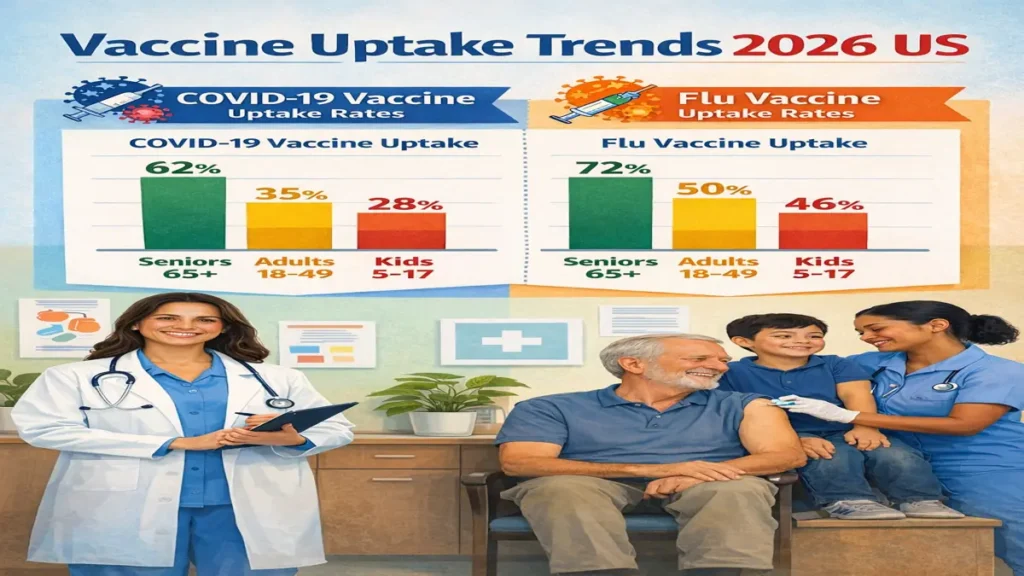
According to the latest data from the U.S. Centers for Disease Control and Prevention (CDC), the answer in early 2026 is complicated — and concerning in some groups. The newest COVID-19 and flu vaccine uptake trends 2026 US reveal uneven progress, lingering hesitancy, and important lessons for families, older adults, and local communities.
This article breaks down what the CDC data actually shows, why it matters right now, and how these trends compare with patterns seen in the UK. This is educational information only, not medical advice — but it can help you make sense of the numbers dominating health headlines.
What the CDC Means by “Vaccine Uptake”
Before diving into the numbers, it helps to clarify what “vaccine uptake” means.
In public health, vaccine uptake refers to the percentage of eligible people who have received a recommended vaccine during a given season. For 2026, the CDC tracks:
- Updated COVID-19 vaccines
- Seasonal influenza (flu) vaccines
- Uptake by age group, risk level, and region
The CDC updates these figures regularly using national surveys, immunization systems, and healthcare reporting networks. You can explore the original dataset directly on the CDC’s official page here:
👉 https://www.cdc.gov/respiratory-viruses/data/vaccination-trends.html
COVID-19 and Flu Vaccine Uptake Trends 2026 US: The Big Picture
The latest CDC snapshot shows a clear divide between flu and COVID-19 vaccination behaviors.
Key takeaways at a glance
- Flu vaccination rates remain higher than COVID-19 vaccination rates
- Older adults (65+) continue to have the highest uptake
- Children and younger adults show the lowest COVID-19 vaccine coverage
- COVID-19 booster fatigue appears to be influencing decisions
While flu vaccination has long been part of seasonal routines in the US and UK, COVID-19 vaccines are still perceived by many as optional or situational — a perception public health experts continue to challenge.
COVID-19 Vaccine Uptake in 2026: Slower Than Expected
One of the most striking findings in the COVID-19 and flu vaccine uptake trends 2026 US is how slowly COVID-19 vaccination numbers are rising compared to previous years.
Adults 65 and older: still leading, but plateauing
Older adults remain the most vaccinated group, largely because they face higher risks of severe illness. However, CDC data suggests growth has stalled, meaning many seniors who skipped the latest update have not yet been persuaded.
Adults under 50: the biggest gap
Among younger adults, COVID-19 vaccine uptake is significantly lower, with many citing:
- Prior infection (“I already had COVID”)
- Fatigue with repeated boosters
- Confusion about updated formulations
- Low perceived personal risk
This pattern mirrors trends seen in late 2024 and 2025, raising concerns about long-term protection — especially as the virus continues to evolve.
Children and teens: the lowest coverage
Children remain the least vaccinated group for COVID-19 in 2026. Pediatric uptake has lagged behind flu vaccination, despite CDC guidance emphasizing protection for schools and households with vulnerable members.
Flu Vaccine Uptake in 2026: More Familiar, More Accepted
In contrast, flu vaccine uptake continues to outperform COVID-19 vaccination across nearly every age group.
Why flu vaccines still win public trust
Public health researchers believe flu vaccines benefit from:
- Decades of public familiarity
- Annual reminders through schools and workplaces
- Fewer political and social controversies
- Clear seasonal messaging
Even so, flu vaccination rates are not universal, and disparities remain among younger adults and underserved communities.
US vs UK: Similar Trends, Different Messaging
Although this CDC report focuses on the US, the UK faces similar challenges.
The UK’s NHS also reports stronger flu vaccine participation than COVID-19 booster uptake, particularly among working-age adults. In both countries:
- Older adults respond best to clear risk messaging
- Younger groups respond better to convenience and trust
- Mixed messages reduce confidence
UK readers can find official vaccine guidance through the NHS here:
👉 https://www.nhs.uk/vaccinations/
Why These Vaccine Uptake Trends Matter in 2026
At first glance, vaccination percentages can feel abstract. But the COVID-19 and flu vaccine uptake trends 2026 US have real-world consequences.
1. Pressure on hospitals
Lower vaccine coverage increases the risk of simultaneous COVID-19 and flu waves, which can overwhelm hospitals — especially during winter surges.
2. Risk for vulnerable populations
Even if younger adults feel safe, low community vaccination rates increase exposure risks for:
- Seniors
- People with chronic illnesses
- Immunocompromised individuals
- Infants too young to be vaccinated
3. Long-term public health planning
Public health agencies use uptake data to decide:
- Where to send mobile clinics
- How to tailor messaging
- Which communities need targeted outreach
In other words, these numbers shape real decisions — not just headlines.
Common Reasons People Are Skipping COVID-19 Vaccines in 2026
The CDC does not just track numbers; it also analyzes why people decline vaccines. The most common reasons include:
- “I’m healthy and don’t need it”
- “I already had COVID”
- “Too many boosters”
- “I’m waiting for clearer guidance”
Understanding these reasons is critical for rebuilding trust — something both US and UK health authorities are actively working on.
What Public Health Experts Emphasize (Without Giving Medical Advice)
Health agencies like the CDC and NHS consistently highlight a few evidence-based principles:
- Vaccines reduce the risk of severe illness, not just infection
- Immunity fades over time, especially in older adults
- Updated vaccines are designed to match circulating strains
- Community protection depends on shared participation
For official guidance, always refer directly to trusted sources like the CDC:
👉 https://www.cdc.gov/vaccines/
How This Data Can Help Families and Communities
You don’t need to be a public health expert to benefit from understanding vaccine trends.
This data can help families:
- Have more informed conversations with loved ones
- Recognize misinformation more easily
- Plan ahead for seasonal illness
- Support vulnerable relatives and neighbors
If you’re looking for practical, supportive, step-by-step guidance based on these trends, Eviida will be publishing a companion article focused on real-life decision-making and confidence building.
👉 Eviida Guidance – How to Improve Vaccine Uptake in 2026
The Bottom Line
The COVID-19 and flu vaccine uptake trends 2026 US tell a clear story:
people still trust flu vaccines more than COVID-19 vaccines, younger adults remain harder to reach, and public health messaging must continue evolving.
For readers in both the US and UK, the takeaway is not fear — but awareness. Understanding the data helps cut through noise, reduce confusion, and support smarter conversations about health in 2026.
Stay informed, rely on trusted sources, and keep checking back with Eviida News for clear, human-centered explanations of the research that affects everyday life.
