
A quiet morning that feels heavier than it should
You wake up.
Not suddenly. Not refreshed.
Just… awake.
The alarm has already gone off twice. Your body feels heavy, like it didn’t rest at all. You sit up slowly, staring at nothing for a moment longer than usual.
Coffee helps. A little.
But the fog doesn’t lift.
You skip breakfast. Or maybe grab something quick—toast, cereal, whatever’s easiest. You tell yourself you’ll eat better later.
But later never quite comes.
If this feels familiar, you’re not alone. And while food won’t fix everything, it might play a bigger role than most people realize.
This is where the idea of a diet for depression recovery begins—not as a perfect plan, but as a small, human step toward feeling better.
What depression actually feels like (beyond the headlines)
Depression isn’t just sadness.
It’s:
- Waking up tired even after sleeping
- Losing interest in things you used to enjoy
- Struggling to focus on simple tasks
- Feeling emotionally flat—or overwhelmed
- Eating too much… or not at all
For many people in the U.S. and U.K., this becomes a daily experience—not a temporary phase.
And when it lasts long enough, even basic habits—like cooking or eating well—start to feel impossible.
That’s why any diet for depression recovery has to start with compassion, not perfection.
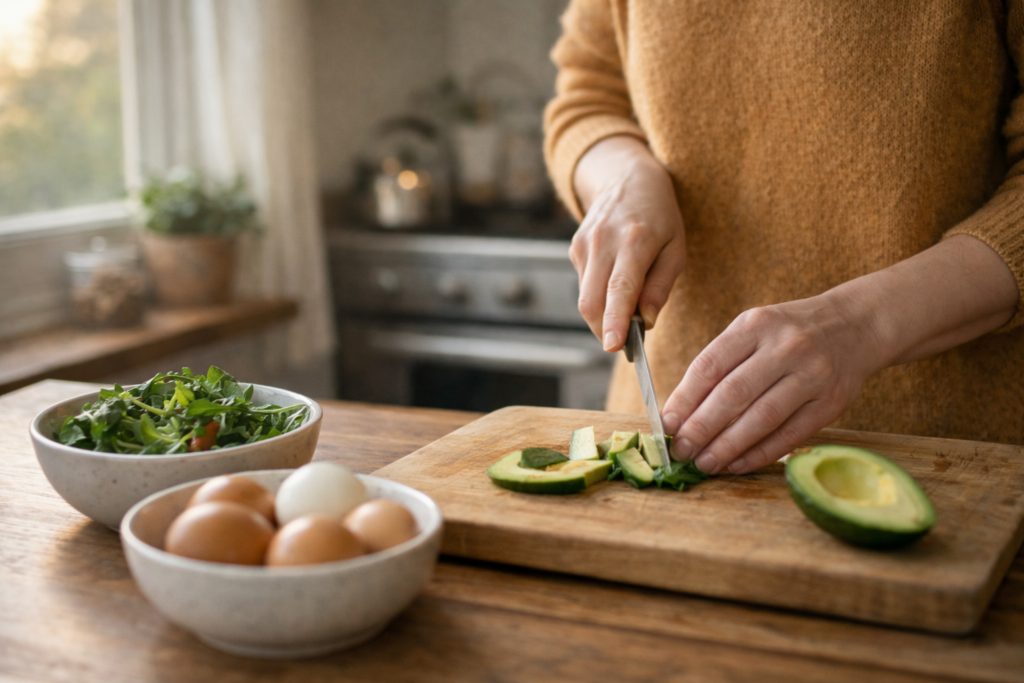
How food affects your brain (in simple terms)
Your brain is always “on.”
Even when you’re resting, it’s working hard—processing thoughts, regulating emotions, keeping your body functioning.
To do that well, it needs the right fuel.
Here’s the simple version:
- Your brain uses nutrients from food to create mood-related chemicals
- It depends on stable energy to function consistently
- It reacts to inflammation and stress signals in the body
When your diet is inconsistent—or heavily processed—it can affect:
- Energy levels
- Focus
- Mood stability
This doesn’t mean food causes depression.
But it does mean food can influence how your brain feels day to day.
What new research suggests about diet and depression
A recent study explored how dietary changes—especially low-carbohydrate, high-fat patterns—might help people with difficult-to-treat depression.
👉 Read the research: https://jamanetwork.com/journals/jamapsychiatry/fullarticle/
In our news breakdown, we explained how a ketogenic-style approach may improve mood in some cases:
👉https://eviida.com/ketogenic-diet-for-depression/
What matters most here isn’t one specific diet.
It’s the bigger idea:
👉 Your brain’s energy system may be deeply connected to your mental health
That opens the door to something powerful:
A practical, flexible diet for depression recovery that supports your brain—not stresses you out.
A realistic diet for depression recovery (step-by-step)
This is not about strict rules.
It’s about rebuilding a relationship with food—one step at a time.
Step 1: Start with consistency, not perfection
Before worrying about “healthy foods,” focus on:
- Eating 2–3 meals per day
- Avoiding long periods without food
- Creating a simple routine
Even something small counts:
- A boiled egg
- A slice of toast with peanut butter
- A handful of nuts
Consistency stabilizes your body—and your brain.
Step 2: Add protein to your day
Protein helps your body produce important brain chemicals.
Easy options:
- Eggs
- Chicken
- Greek yogurt
- Beans and lentils
- Tofu
You don’t need a perfect meal.
Just include some protein when you can.
Step 3: Include healthy fats (important for brain function)
This is where the research becomes interesting.
Healthy fats may support brain energy and stability.
Examples:
- Avocados
- Salmon
- Olive oil
- Nuts and seeds
You don’t need to follow a strict ketogenic diet.
But adding more healthy fats can support a diet for depression recovery.
Step 4: Stabilize your energy (reduce extreme highs and lows)
Highly processed foods can cause quick spikes and crashes.
Instead, aim for:
- Whole grains
- Balanced meals
- Fewer ultra-processed snacks
This helps avoid the “energy rollercoaster” that can worsen mood swings.
Foods to include (simple, real-life examples)
You don’t need exotic ingredients.
Here are realistic options for a diet for depression recovery:
Breakfast ideas
- Eggs with whole grain toast
- Greek yogurt with berries
- Oatmeal with nuts
Lunch ideas
- Chicken salad with olive oil dressing
- Lentil soup with bread
- Tuna sandwich with greens
Dinner ideas
- Salmon with vegetables
- Rice and beans with avocado
- Stir-fried vegetables with tofu
Snacks
- Nuts
- Fruit
- Cheese
- Boiled eggs
Simple. Affordable. Flexible.
Foods to reduce (without guilt)
This is not about cutting everything out.
It’s about awareness.
Try to reduce:
- Highly processed snacks
- Sugary drinks
- Frequent fast food
- Excess alcohol
But here’s the key:
👉 No guilt if you eat them
A sustainable diet for depression recovery allows room for real life.
A simple daily routine (US & UK lifestyle)
Here’s what a balanced day might look like:
Morning
Coffee + eggs or yogurt
Midday
Sandwich or salad with protein
Afternoon
Snack (nuts or fruit)
Evening
Simple home-cooked meal
This isn’t a strict plan.
It’s a gentle structure your brain can rely on.
The emotional barriers no one talks about
Knowing what to eat is one thing.
Doing it when you feel low is something else entirely.
Common challenges:
“I don’t have the energy to cook”
Solution:
- Keep ready-to-eat options (boiled eggs, yogurt, canned beans)
“Healthy food feels expensive”
Solution:
- Use simple staples (eggs, rice, lentils, frozen vegetables)
“I don’t feel motivated”
Solution:
- Lower the bar
- Focus on one small change, not everything
“I keep failing”
You’re not failing.
You’re dealing with a condition that affects motivation, energy, and decision-making.
That’s exactly why a diet for depression recovery needs to be flexible and forgiving.
Building sustainable habits (not short-term fixes)
The goal isn’t a perfect diet.
It’s a repeatable pattern.
Focus on:
- Small improvements
- Consistency over intensity
- Progress over perfection
Even this counts:
- Eating one real meal today
- Drinking more water
- Adding one healthy food
That’s how change actually happens.
Important: what diet can—and cannot do
Let’s be honest.
A diet for depression recovery can:
- Support energy levels
- Improve stability
- Help your brain function better
But it cannot:
- Replace therapy
- Replace medication (if needed)
- Cure depression on its own
Think of it as one part of a bigger support system.
A different way to think about recovery
Instead of asking:
👉 “What diet should I follow?”
Try asking:
👉 “What small change can I make today to support my brain?”
That shift matters.
Because recovery isn’t about perfection.
It’s about direction.
Final thought
If you’re struggling, start small.
Eat something simple today.
Then do it again tomorrow.
A diet for depression recovery isn’t built in one day—it’s built in small, repeatable moments that slowly add up.
And over time, those moments can begin to change how you feel.
Disclaimer
This content is for educational purposes only and is not medical advice. Always consult a qualified healthcare professional before making changes to your diet or treatment plan.
