
Written by: Eviida Medical Editorial Team
Medical review: Completed under Eviida’s evidence-based standards
Last updated: January 2026
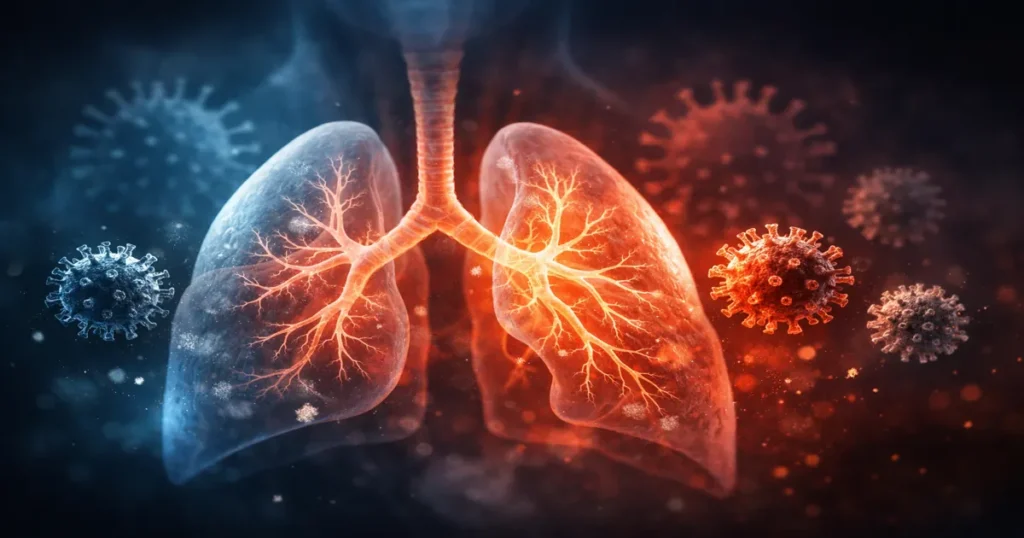
AI-Ready Medical Summary
Flu, COVID-19, and RSV often begin with similar symptoms, but their internal timelines, complication risks, and warning signs differ. Understanding how each virus moves through the body—day by day—helps you recognize danger signals early and know exactly when home care is enough and when medical care is urgent.
Key Signals Box — What’s Happening Inside the Body
Primary systems involved:
• Respiratory system (nose, throat, bronchi, lungs)
• Immune system (innate antiviral response)
• Cardiovascular system (oxygen delivery, inflammation load)
Key organs:
• Nasal epithelium
• Lungs (alveoli, bronchioles)
• Heart (stress and oxygen demand)
• Brain (fever, fatigue signaling)
Biological markers & responses:
• Interferons & cytokines (viral defense signals)
• C-reactive protein (inflammation)
• Oxygen saturation
• Body temperature regulation
• Mucus production & airway swelling
Inside the Body: Why These Viruses Feel So Similar (But Aren’t)
Flu, COVID-19, and RSV all enter through the same doorway: your respiratory tract.
They land silently on the moist lining of your nose and throat. Within hours, they begin hijacking cells, turning them into microscopic virus factories.
Your immune system responds fast—releasing fever signals, inflammatory messengers, and fatigue-inducing chemicals meant to slow the spread.
This is why early symptoms overlap:
• Sore throat
• Runny or blocked nose
• Fever or chills
• Headache
• Body aches
• Cough
• Exhaustion
But beneath the surface, their speed, depth, and risk patterns diverge.
Symptom Timelines: Day-by-Day Comparison
🦠 Influenza (Flu): Fast and Aggressive
Incubation: 1–4 days (usually ~2 days)
Day 1–2:
Sudden fever, chills, headache, intense body aches.
Inside your body, influenza rapidly inflames the airway lining and floods muscles with immune chemicals.
Day 3–5:
Dry cough, chest discomfort, extreme fatigue.
The immune system peaks. Lung irritation is common.
Day 5–10:
Fever fades. Cough and weakness linger.
In some people, inflammation opens the door to pneumonia or sinus infections.
Typical flu signature:
⚡ sudden onset, strong body pain, high fever.
COVID-19: System-Wide and Unpredictable
Incubation: 2–7 days (sometimes longer)
Day 1–3:
Scratchy throat, fatigue, headache, mild cough.
The virus quietly multiplies before full immune activation.
Day 4–7:
Fever, cough, congestion, muscle aches, sometimes loss of smell or taste.
Inflammation spreads beyond airways into blood vessels and organs.
Day 7–12:
Most people improve.
A minority worsen—developing shortness of breath, chest pressure, or oxygen drops.
After week 2:
Some experience prolonged inflammation (post-viral fatigue, brain fog, heart rhythm changes).
Typical COVID signature:
🧬 delayed peak, wider organ involvement, longer recovery in some.
RSV: Small Airways, Big Impact
Incubation: 2–8 days
Day 1–2:
Runny nose, mild cough, low fever.
Day 3–5:
Worsening cough, wheezing, breathing effort increases.
RSV inflames the smallest airways, which is why infants and older adults are vulnerable.
Day 5–10:
Most recover.
High-risk groups may develop bronchiolitis or pneumonia.
Typical RSV signature:
🌬️ heavy mucus, wheezing, breathing difficulty—especially in babies and seniors.
Why Timelines Matter
Your immune system doesn’t just fight viruses.
It remodels tissues, redirects blood flow, and alters brain chemistry.
Knowing the expected timeline allows you to spot danger when the body’s pattern breaks.
Worsening after day 5…
Sudden breathing change…
Chest pain…
Confusion…
Bluish lips…
These are not “normal flu symptoms.”
They are biological alarms.
When to Seek Medical Care Immediately
Seek urgent care or emergency help if any virus causes:
• Trouble breathing or rapid breathing
• Chest pain or pressure
• Blue or gray lips or fingertips
• New confusion or trouble staying awake
• Persistent vomiting
• Oxygen level under 94%
• Fever above 103°F that won’t come down
• Worsening symptoms after initial improvement
Extra caution groups:
• Infants under 1 year
• Adults over 65
• Pregnant individuals
• People with asthma, heart disease, diabetes, obesity, cancer, or weakened immunity
When Home Care Is Usually Enough
If symptoms are mild to moderate and improving:
• Rest aggressively
• Hydrate continuously
• Use fever reducers as directed
• Monitor breathing
• Isolate to protect others
Most healthy adults recover at home.
The goal isn’t “no symptoms.”
The goal is stable breathing, improving fever, and daily progress.
Can You Tell Which Virus It Is by Symptoms Alone?
Not reliably.
Flu, COVID-19, and RSV overlap heavily.
Testing is the only way to confirm.
This matters because:
• Antivirals work best early for flu and COVID
• Isolation rules differ
• Risk prediction changes by virus
FAQ — Fast Answers
Q: Which one is most dangerous?
It depends on age, health, and timing. All three can become serious.
Q: Can adults get RSV?
Yes. It’s common and often mild—but dangerous in older adults.
Q: Do vaccines matter?
Yes. Flu and COVID vaccines dramatically reduce hospitalization and death risk.
Q: Why do some people worsen after a week?
Because immune-driven lung inflammation peaks later than viral growth.
Medical Safety Notes
This article is educational, not diagnostic.
Never ignore breathing difficulty, chest pain, or sudden deterioration.
When in doubt, seek medical evaluation.
Short Medical Disclaimer
This content is for educational purposes only and does not replace professional medical diagnosis or treatment. Always consult a qualified healthcare provider for concerns, symptoms, or medical decisions.
