
Why Stress Feels So Heavy Today
It’s 6:30 a.m. The alarm goes off. You’re already tired. Your phone lights up with emails, notifications, and reminders before your feet even hit the floor. Somewhere between traffic, work deadlines, family responsibilities, and constant news alerts, stress stops being an occasional feeling—and becomes a daily companion.
For millions of Americans, stress isn’t just mental. It shows up as headaches, tight shoulders, poor sleep, emotional eating, irritability, and exhaustion that no amount of coffee seems to fix.
The good news?
You don’t need extreme diets, expensive retreats, or prescription medication as your first step.
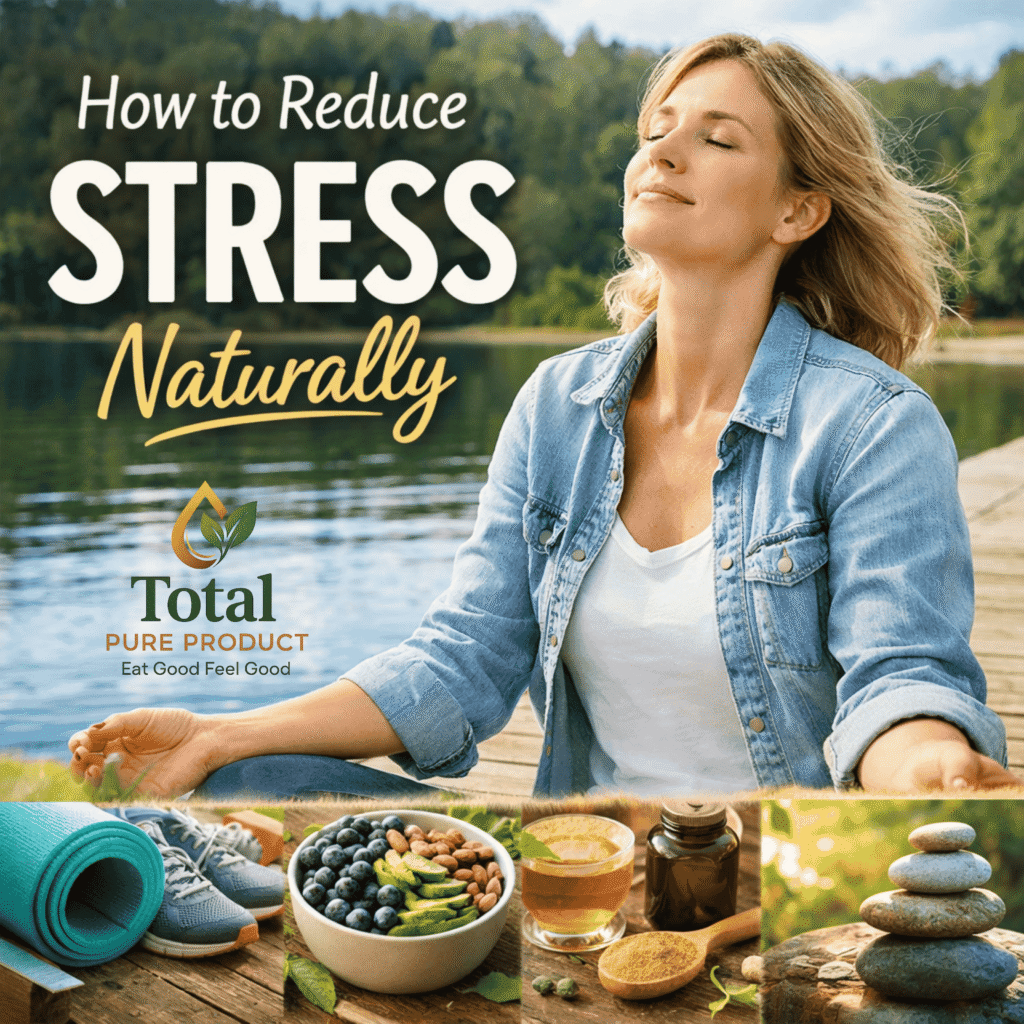
You can learn how to reduce stress naturally—in ways that actually fit into real American life.
This guide walks you through practical, science-supported, natural strategies that help your nervous system calm down, your mind slow down, and your body recover.
What Stress Really Is (And Why It’s So Hard to Escape)
Stress is your body’s survival response. When your brain senses danger—real or perceived—it releases hormones like cortisol and adrenaline to help you react quickly.
That response is useful in short bursts.
But modern stress rarely turns off.
H3: Acute Stress vs. Chronic Stress
Acute stress is temporary. A presentation. A near accident. A tough conversation.
Chronic stress is ongoing:
- Financial pressure
- Job insecurity
- Long work hours
- Poor sleep
- Relationship strain
- Constant digital stimulation
When stress becomes chronic, your body stays in “fight or flight” mode—damaging your health over time.
How Chronic Stress Affects the Body and Mind
Stress isn’t just “in your head.” It changes how your entire body functions.
H3: Physical Effects of Chronic Stress
- High blood pressure
- Digestive problems
- Weight gain (especially belly fat)
- Frequent illness
- Muscle tension and pain
- Fatigue
H3: Mental and Emotional Effects
- Anxiety and racing thoughts
- Irritability or emotional numbness
- Trouble focusing
- Poor decision-making
- Burnout
Learning how to reduce stress naturally isn’t about becoming calm all the time—it’s about helping your body return to balance.
Why Natural Stress Reduction Works Better Long Term
Quick fixes—like alcohol, scrolling, or overeating—may numb stress temporarily, but they often make it worse later.
Natural stress reduction works because it:
- Supports the nervous system
- Improves hormone balance
- Builds long-term resilience
- Doesn’t create dependency
Most importantly, it puts control back in your hands.
Breathing: The Fastest Natural Way to Calm Stress
Your breath is one of the few body functions you can control—and it directly affects your nervous system.
H3: Why Breathing Works
Slow, deep breathing activates the parasympathetic nervous system—the part responsible for rest and relaxation.
H4: Simple Breathing Technique (2 Minutes)
- Inhale through your nose for 4 seconds
- Hold for 4 seconds
- Exhale slowly through your mouth for 6 seconds
- Repeat for 2–5 minutes
This technique lowers heart rate and cortisol almost immediately.
Movement and Exercise: Stress Relief That Lasts
Exercise isn’t about weight loss—it’s about stress regulation.
H3: How Movement Reduces Stress
- Releases endorphins
- Lowers cortisol
- Improves sleep
- Clears mental tension
H4: Best Low-Stress Exercises
- Walking outdoors
- Light jogging
- Yoga or stretching
- Strength training
- Swimming
Even 20 minutes a day can significantly lower stress levels.
Nutrition: How Food Affects Stress More Than You Think
What you eat directly influences your mood, energy, and stress hormones.
H3: Foods That Increase Stress
- Excess sugar
- Highly processed foods
- Too much caffeine
- Alcohol
These spike blood sugar and cortisol—leading to anxiety and crashes.
H3: Foods That Naturally Reduce Stress
- Leafy greens
- Fatty fish
- Nuts and seeds
- Whole grains
- Fruits rich in vitamin C
Eating regularly and staying hydrated also stabilizes stress hormones.
Sleep: The Foundation of Stress Recovery
Poor sleep doesn’t just cause stress—it multiplies it.
H3: How Sleep and Stress Are Connected
When sleep is short or irregular:
- Cortisol stays elevated
- Emotional regulation drops
- Anxiety increases
H4: Natural Ways to Improve Sleep
- Go to bed at the same time nightly
- Limit screens 1 hour before sleep
- Keep the bedroom dark and cool
- Avoid caffeine after early afternoon
Better sleep alone can dramatically reduce stress within days.
Mindfulness and Meditation (Without the Pressure)
You don’t need to sit cross-legged for an hour to benefit.
H3: What Mindfulness Really Means
Mindfulness is simply noticing the present moment without judgment.
H4: Easy Mindfulness Practice
- Sit quietly for 3 minutes
- Focus on your breath
- When thoughts arise, gently return to breathing
This trains your brain to stop overreacting to stressors.
Nature: One of the Most Overlooked Stress Remedies
Americans spend most of their time indoors—yet nature is a powerful stress reducer.
H3: Why Nature Calms the Brain
Time outdoors:
- Lowers cortisol
- Reduces anxiety
- Improves mood and focus
Even a short walk in a park or sitting in sunlight can help.
Social Connection: Stress Is Lighter When Shared
Stress thrives in isolation.
H3: How Connection Reduces Stress
- Releases oxytocin (a calming hormone)
- Provides emotional safety
- Reduces feelings of overwhelm
A phone call, shared meal, or honest conversation can calm stress more than you expect.
Natural Supplements for Stress (Use Carefully)
Some supplements may help—but they are not magic fixes.
H3: Common Natural Options
- Magnesium
- Ashwagandha
- L-theanine
- Omega-3 fatty acids
Always consult a healthcare professional, especially if you take medications.
What Not to Do When Managing Stress Naturally
Some habits make stress worse long term:
- Skipping meals
- Overworking without breaks
- Relying on alcohol to relax
- Ignoring emotional needs
Reducing stress naturally requires consistency, not perfection.
A Simple 7-Day Natural Stress Reduction Plan
Day 1–2
- 10-minute walk daily
- Breathing exercise once per day
Day 3–4
- Add consistent sleep schedule
- Reduce caffeine slightly
Day 5–6
- Practice mindfulness for 3 minutes
- Eat one whole-food meal
Day 7
- Reflect on stress triggers
- Spend time outdoors or with loved ones
Small steps create big changes.
Frequently Asked Questions
H3: How long does it take to reduce stress naturally?
Many people feel calmer within days, but lasting change happens over weeks with consistency.
H3: Can natural stress relief replace medication?
For mild to moderate stress, yes. For severe anxiety or depression, professional guidance is essential.
H3: What is the fastest natural way to reduce stress?
Deep breathing and stepping away from stimulation are the fastest.
You’re Not Broken—You’re Overloaded
Stress doesn’t mean you’re weak. It means you’re human—living in a fast, demanding world.
Learning how to reduce stress naturally isn’t about doing more.
It’s about listening to your body, simplifying your habits, and giving yourself permission to slow down.
Calm isn’t something you chase.
It’s something you build—one small, natural habit at a time.
