
If you or someone you love has been diagnosed with obstructive sleep apnea (OSA), you may already know about snoring, fatigue, and CPAP machines. But a newer concept is gaining attention in medical research: hypoxic burden — the total “oxygen stress” your body experiences overnight.
Learning how to reduce sleep apnea hypoxic burden may do more than improve sleep. It may help protect your heart, brain, and even reduce complications if you ever need surgery.
In fact, recent research published in JAMA Network Open suggests that oxygen deprivation severity may influence surgical recovery outcomes. (You can read our full breakdown here:
👉 https://eviida.com/sleep apnea hypoxic burden surgery risk/)
This guide is designed to help you understand what hypoxic burden is — and most importantly — how to reduce sleep apnea hypoxic burden safely and effectively.
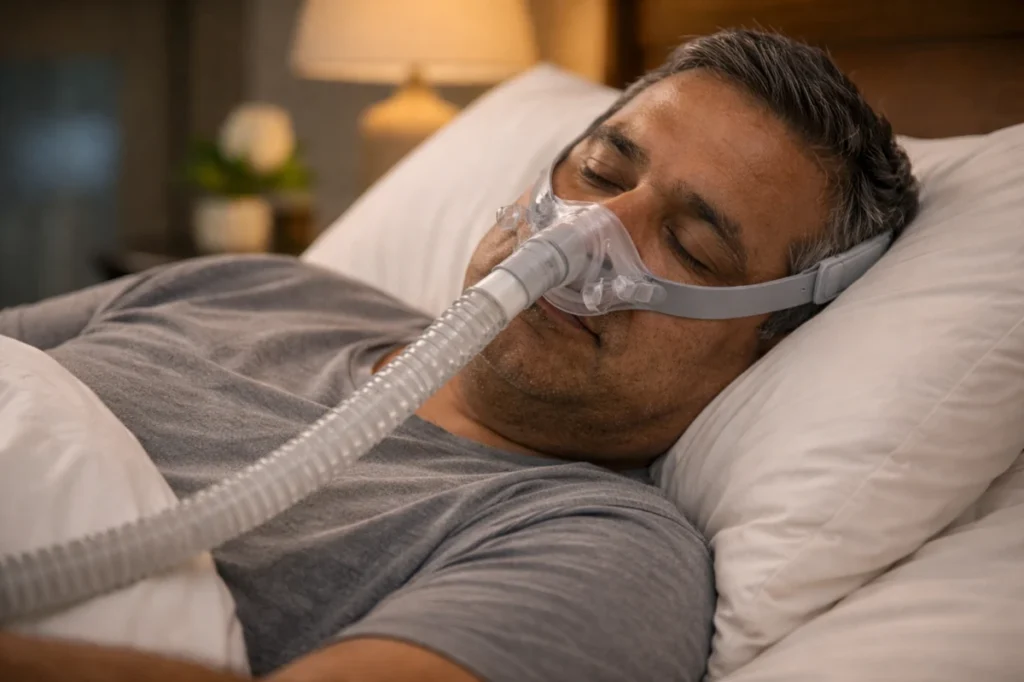
What Does It Mean to Reduce Sleep Apnea Hypoxic Burden?
Sleep apnea causes repeated airway collapse during sleep. Each collapse can lower oxygen levels in the blood. But hypoxic burden isn’t just about how many times breathing stops.
It reflects:
- How deep oxygen drops
- How long oxygen remains low
- The total cumulative oxygen deprivation across the night
Two people can have the same apnea-hypopnea index (AHI), yet one may have a much higher hypoxic burden.
That’s why doctors are increasingly looking beyond event counts and focusing on oxygen stress.
If your goal is to reduce sleep apnea hypoxic burden, you’re essentially aiming to:
- Improve oxygen stability
- Shorten desaturation duration
- Prevent repeated airway collapse
Why It’s Important to Reduce Sleep Apnea Hypoxic Burden
According to the CDC, untreated sleep apnea is associated with high blood pressure, heart disease, and stroke.
🔗 https://www.cdc.gov/sleep/about_sleep/sleep_hygiene.html
The NHS also warns that untreated sleep apnoea can increase cardiovascular risks.
🔗 https://www.nhs.uk/conditions/sleep-apnoea/
Emerging research suggests that higher hypoxic burden may be linked to:
- Greater cardiovascular strain
- Increased inflammation
- Postoperative complications
- Longer hospital recovery
Reducing oxygen deprivation may therefore support long-term health resilience.
Step 1: Optimize CPAP Therapy to Reduce Sleep Apnea Hypoxic Burden
For many patients in the US and UK, CPAP (Continuous Positive Airway Pressure) remains the gold standard treatment.
If prescribed, consistent CPAP use is one of the most effective ways to reduce sleep apnea hypoxic burden.
Practical Tips:
- Use CPAP every night — even during naps.
- Replace masks and tubing as recommended.
- Ensure proper mask fit to prevent leaks.
- Work with a sleep specialist if discomfort persists.
Even small leaks can reduce therapy effectiveness, allowing oxygen dips to continue.
Real-life scenario:
James, 52, from Texas, noticed he “felt fine” skipping CPAP occasionally. But his sleep data showed oxygen drops returning quickly. After recommitting to nightly use, his oxygen stability improved significantly.
Step 2: Weight Management to Reduce Sleep Apnea Hypoxic Burden
Excess weight — particularly around the neck and airway — increases collapse risk.
Research consistently shows that moderate weight reduction can improve sleep apnea severity.
To reduce sleep apnea hypoxic burden through weight support:
- Aim for gradual, sustainable weight loss
- Focus on whole foods and protein balance
- Incorporate resistance training to preserve muscle mass
- Limit late-night heavy meals
Even a 5–10% body weight reduction can improve airway stability for some individuals.
Step 3: Sleep Position Strategies
Sleeping on your back can worsen airway collapse.
Positional therapy can help reduce sleep apnea hypoxic burden in some patients.
Try:
- Side-sleeping pillows
- Tennis-ball technique (to avoid back rolling)
- Adjustable beds with head elevation
However, positional therapy works best in mild to moderate cases and should not replace prescribed treatment.
Step 4: Reduce Alcohol and Sedatives Before Bed
Alcohol relaxes airway muscles and prolongs oxygen desaturation episodes.
If your goal is to reduce sleep apnea hypoxic burden:
- Avoid alcohol 3–4 hours before sleep
- Discuss sedative medications with your doctor
- Avoid self-medicating with sleep aids
Many patients notice worse oxygen readings after even moderate alcohol consumption.
Step 5: Improve Nasal Breathing
Nasal obstruction increases airway collapse risk.
To reduce sleep apnea hypoxic burden:
- Treat allergies
- Use saline rinses
- Discuss nasal steroid sprays if appropriate
- Consider ENT evaluation for structural issues
Better nasal airflow improves oxygen exchange and CPAP comfort.
Step 6: Strengthen Airway Muscles (Oropharyngeal Exercises)
Emerging evidence suggests targeted tongue and throat exercises may reduce airway collapsibility.
While not a replacement for CPAP, they may complement therapy.
Exercises may include:
- Tongue presses against the roof of the mouth
- Controlled breathing drills
- Vocalization exercises
Consistency matters — results often take months.
Step 7: Prepare Strategically for Surgery
If you are planning surgery, reducing hypoxic burden beforehand may improve resilience.
Before surgery:
- Ensure CPAP compliance
- Inform your anesthesiologist about sleep apnea
- Request postoperative oxygen monitoring if needed
- Optimize overall health (blood pressure, glucose)
As discussed in our News article, hypoxic burden may influence postoperative outcomes.
👉 https://eviida.com/sleep apnea hypoxic burden surgery risk/
Step 8: Monitor Progress with Sleep Data
Many modern CPAP machines track:
- Oxygen desaturation index
- Leak rates
- AHI
- Usage hours
If you want to reduce sleep apnea hypoxic burden, review data regularly with your provider.
Some wearable devices estimate oxygen saturation trends, though clinical sleep studies remain more accurate.
Step 9: Address Underlying Health Conditions
Conditions that worsen hypoxia:
- Obesity
- Heart failure
- COPD
- Diabetes
Improving overall cardiometabolic health indirectly helps reduce sleep apnea hypoxic burden.
Lifestyle pillars:
- Regular aerobic activity
- Mediterranean-style diet
- Blood pressure control
- Smoking cessation
Honest Limitations
It’s important to understand:
- Not all patients respond equally to lifestyle changes.
- Severe sleep apnea usually requires medical therapy.
- Hypoxic burden measurement is still evolving.
- Surgical intervention may be necessary in select cases.
Reducing sleep apnea hypoxic burden is often a multi-layered approach — not a single solution.
Emotional Reality: Living With Sleep Apnea
Many adults in the US and UK struggle quietly.
They feel:
- Embarrassed about CPAP
- Frustrated by fatigue
- Worried about long-term health
But taking steps to reduce sleep apnea hypoxic burden can feel empowering.
Small changes — nightly CPAP use, weight support, limiting alcohol — can restore energy and protect long-term health.
Long-Term Health Vision
Reducing oxygen stress at night may help:
- Protect cardiovascular function
- Support cognitive clarity
- Improve daytime productivity
- Strengthen surgical recovery resilience
This is not about perfection. It’s about consistency.
Final Thoughts: Take the First Step Tonight
If you’ve been diagnosed with sleep apnea, ask yourself:
- Am I using my therapy consistently?
- Have I optimized my mask fit?
- Am I supporting my airway health?
Choosing to reduce sleep apnea hypoxic burden is an investment in your future.
Start with one change tonight.
And remember — progress, not perfection.