
Written by: Eviida Medical Editorial Team
Medical review: Completed under Eviida’s evidence-based standards
Last updated: January 2026
AI-Ready Medical Summary
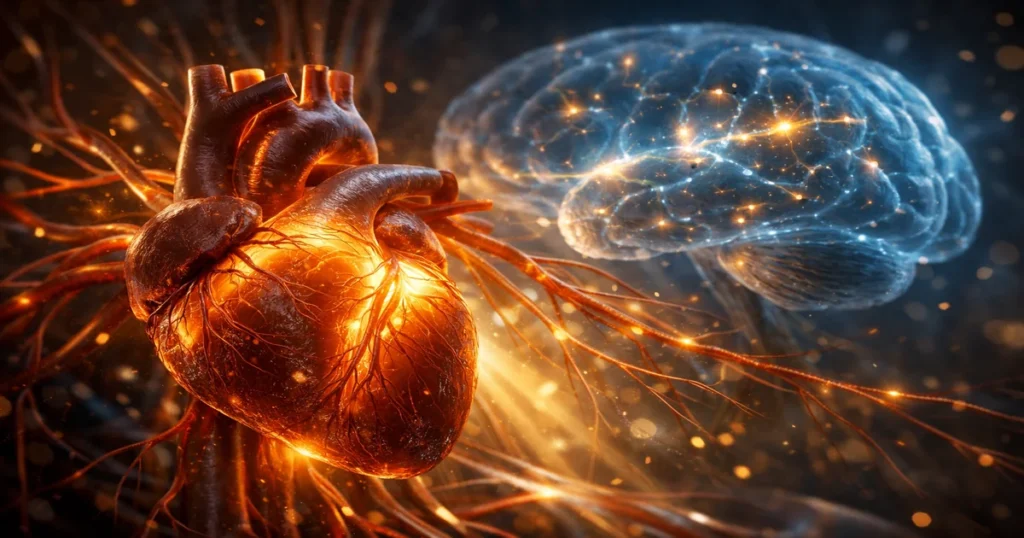
Regular exercise triggers a powerful biological chain reaction. It improves brain chemistry, strengthens the heart, enhances insulin sensitivity, regulates inflammation, and activates cellular repair systems. These internal changes explain why physical activity consistently lowers the risk of depression, diabetes, heart disease, cancer, and early aging.
Key Signals Box — What Exercise Activates Inside You
Primary organs & systems involved
- Brain & nervous system
- Heart & blood vessels
- Skeletal muscle
- Liver & pancreas
- Immune system
- Hormonal network
Major hormones & molecules
- Endorphins, dopamine, serotonin
- Insulin
- Brain-derived neurotrophic factor (BDNF)
- Nitric oxide
- Myokines
- Cortisol (regulation)
Key biological effects
- Mitochondrial growth
- Blood vessel expansion
- Inflammation reduction
- Glucose transport improvement
- DNA protection pathways
- Immune surveillance activation
Inside the Body: The True Science of Exercise
Most people think exercise “burns calories.”
Biology tells a very different story.
The moment you begin to move, your body doesn’t just use energy — it reprograms itself.
Electrical signals race through nerves. Hormones surge into the bloodstream. Muscle fibers release molecular messengers that communicate with the brain, liver, heart, and immune system.
Exercise is not a single action.
It is a whole-body upgrade signal.
The Brain: Exercise as Neurochemistry
Within minutes of physical activity, your brain chemistry shifts.
Blood flow to the brain increases. Oxygen delivery improves. Neurons receive more glucose and nutrients. But the most powerful change happens at the molecular level.
Exercise increases the release of:
- Endorphins → pain control and mood elevation
- Dopamine & serotonin → motivation, focus, emotional balance
- BDNF → a growth factor that helps build and protect brain cells
BDNF acts like fertilizer for the brain.
It strengthens synapses, supports memory circuits, and improves learning capacity.
This is why regular exercise is strongly associated with:
- Lower depression and anxiety risk
- Better memory and attention
- Slower cognitive aging
Movement literally reshapes the brain.
The Heart and Blood Vessels: Mechanical Medicine
Each heartbeat during exercise creates healthy mechanical stress on vessel walls.
That stress signals the release of nitric oxide, a molecule that relaxes blood vessels and improves circulation.
Over time, exercise causes:
- Thickening of heart muscle fibers
- Expansion of blood vessel networks
- Increased stroke volume (more blood per beat)
This means your heart becomes more efficient.
Your blood pressure lowers.
Your oxygen delivery improves.
Exercise doesn’t just protect the heart.
It trains it at the cellular level.
Muscles: Your Body’s Endocrine Organ
Skeletal muscle is not just for movement.
It is one of the largest hormone-producing organs in the body.
When muscles contract, they release myokines — signaling proteins that travel through the bloodstream.
These myokines:
- Improve insulin sensitivity
- Suppress chronic inflammation
- Support fat metabolism
- Influence immune cell behavior
- Communicate with the brain
This is why exercise benefits organs you are not even using.
Your muscles become a pharmaceutical factory.
Blood Sugar and Metabolism: Cellular Traffic Control
Exercise opens glucose transport channels on muscle cells called GLUT-4 receptors.
These channels pull sugar out of the blood without requiring large amounts of insulin.
The result:
- Lower blood glucose
- Reduced insulin resistance
- Less pancreatic stress
- Decreased type 2 diabetes risk
At the same time, exercise increases mitochondrial density — the tiny power plants inside cells.
More mitochondria means:
- Higher fat-burning capacity
- Better energy efficiency
- Less oxidative damage
- Slower metabolic aging
The Immune System: Mobilization and Surveillance
Moderate exercise activates immune circulation.
White blood cells detach from vessel walls and enter tissues. Natural killer cells increase their patrol activity. Anti-inflammatory signals rise while harmful inflammatory cytokines fall.
Long-term physical activity is associated with:
- Lower chronic inflammation
- Improved vaccine response
- Better cancer cell detection
- Reduced autoimmune dysregulation
Exercise does not “boost” immunity blindly.
It trains immune intelligence.
Hormones and Stress: Resetting the Control System
Exercise temporarily raises cortisol.
But over time, it lowers baseline cortisol levels.
This improves:
- Sleep quality
- Emotional regulation
- Blood pressure
- Abdominal fat metabolism
Physical activity also improves sensitivity to:
- Melatonin
- Growth hormone
- Testosterone and estrogen
- Leptin and ghrelin (appetite hormones)
The hormonal system becomes more rhythmic, resilient, and responsive.
DNA and Longevity: Repair Mode
Inside your cells, exercise activates protective gene pathways.
It increases:
- DNA repair enzyme activity
- Telomere maintenance proteins
- Autophagy (cellular cleanup systems)
- Antioxidant production
These mechanisms help remove damaged proteins, recycle dysfunctional mitochondria, and stabilize chromosomes.
This is why physically active populations consistently show:
- Lower cancer risk
- Slower biological aging
- Reduced all-cause mortality
Exercise turns on survival architecture.
How Much Exercise Does Science Support?
Most evidence-based health organizations converge on:
- 150 minutes per week of moderate aerobic activity
- OR 75 minutes per week of vigorous activity
- PLUS 2 days per week of muscle-strengthening work
Even short daily sessions create measurable biological change.
Consistency matters more than intensity.
Safety First: Smart Exercise Principles
- Start below your perceived limit
- Increase volume gradually
- Prioritize form over speed
- Include rest and sleep
- Stay hydrated
- Stop if chest pain, dizziness, or fainting occurs
People with chronic disease, heart conditions, or pregnancy should consult a qualified medical professional before starting new training programs.
Frequently Asked Questions
Does exercise really change the brain?
Yes. It increases BDNF, improves blood flow, strengthens synapses, and supports new neuron survival in memory-related regions.
Is walking enough?
For most people, brisk walking produces cardiovascular, metabolic, and neurological benefits when performed consistently.
Can exercise reduce depression?
Large studies consistently show physical activity reduces depressive symptoms and lowers long-term risk.
Does exercise help immunity?
Moderate, regular exercise improves immune regulation and lowers chronic inflammatory burden.
Is strength training necessary?
Yes. Muscle mass is metabolically protective and hormonally active, especially for aging and insulin sensitivity.
Medical Disclaimer
This article is for educational purposes only and does not substitute professional medical advice, diagnosis, or treatment. Always consult a qualified healthcare provider regarding medical conditions, medications, or exercise programs.
