
Sleep Apnea Hypoxic Burden Surgery Risk Is Drawing New Attention
A new study published in JAMA Network Open has put the spotlight on an emerging concern: sleep apnea hypoxic burden surgery risk may be higher than previously understood — especially for patients undergoing major procedures.
Obstructive sleep apnea (OSA) already affects an estimated 30 million adults in the United States, according to the CDC. In the UK, the NHS estimates that hundreds of thousands live with undiagnosed sleep apnea. But this latest research suggests that it’s not just having sleep apnea that matters — it’s how severe the oxygen drops are during the night.
That severity is measured as hypoxic burden, and researchers say it may significantly influence surgical recovery outcomes.
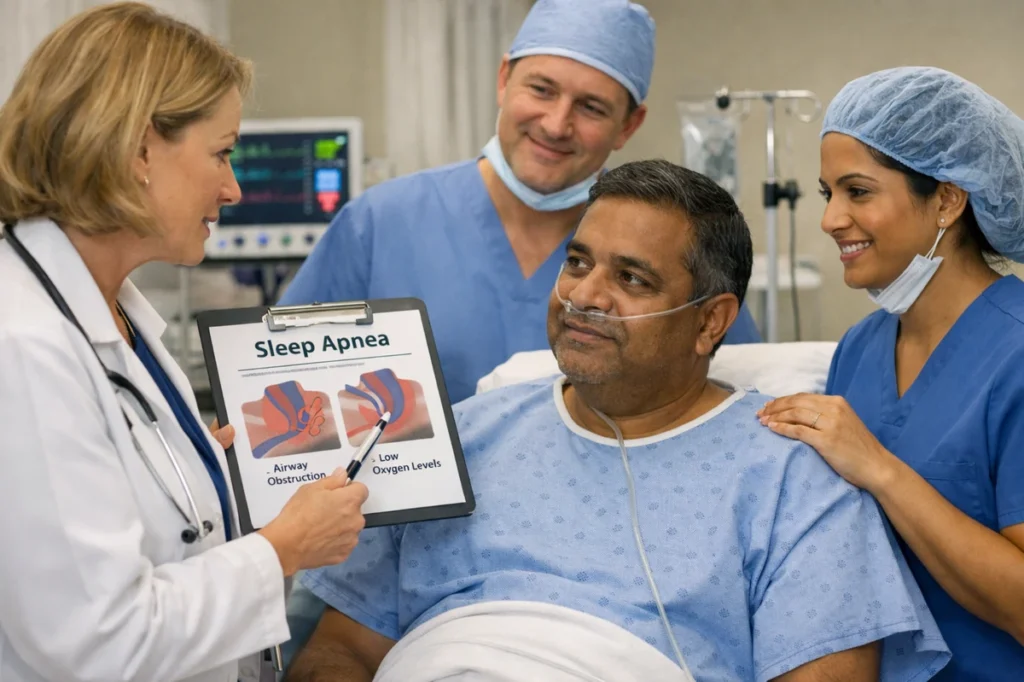
What Is “Hypoxic Burden” — And Why Does It Matter?
When people think of sleep apnea, they often think about snoring or daytime fatigue. But clinically, doctors measure:
- Apnea-hypopnea index (AHI) — number of breathing pauses per hour
- Oxygen desaturation levels — how low oxygen drops
- Duration of oxygen drops
Hypoxic burden refers to the cumulative amount of oxygen deprivation over the course of the night. It measures not just how often breathing stops, but how deeply and how long oxygen levels fall.
According to the new JAMA Network Open study (published February 24, 2026), higher hypoxic burden was associated with:
- Increased postoperative respiratory complications
- Longer hospital stays
- Higher risk of cardiovascular instability after surgery
👉 Read the official study here:
JAMA Network Open (Feb 24, 2026): Sleep Apnea–Specific Hypoxic Burden and Postoperative Outcomes
(Insert clickable official journal link)
This shifts the conversation around sleep apnea hypoxic burden surgery risk from a theoretical concern to a measurable surgical safety factor.
Why Surgery Increases Risk for Sleep Apnea Patients
Surgery already stresses the body. Add anesthesia, sedation, and pain medications — and breathing can become even more vulnerable.
Here’s why sleep apnea hypoxic burden surgery risk becomes especially important:
1️⃣ Anesthesia Depresses Breathing
General anesthesia relaxes airway muscles, increasing the chance of airway collapse — the core problem in obstructive sleep apnea.
2️⃣ Opioid Pain Medications
Post-surgical pain control often involves opioids, which suppress respiratory drive.
3️⃣ Inflammation and Fluid Shifts
Major surgery can lead to swelling in airway tissues, worsening oxygen obstruction at night.
When patients already experience significant nighttime oxygen deprivation, the added stress may compound complications.
What the New Study Found
The research team analyzed surgical patients with diagnosed obstructive sleep apnea. Instead of relying only on AHI, they measured hypoxic burden using sleep study data.
Key findings:
- Patients with higher hypoxic burden had significantly more postoperative complications.
- Oxygen-related stress appeared to correlate with cardiovascular strain.
- Hypoxic burden predicted outcomes more reliably than traditional apnea counts alone.
In simple terms: not all sleep apnea is equal.
Two patients with the same AHI score may have very different oxygen stress profiles — and very different surgical risks.
That distinction could change how hospitals assess sleep apnea hypoxic burden surgery risk in the future.
What This Means for Patients in the US
In the United States, millions undergo elective surgeries each year — from orthopedic procedures to bariatric surgery and cardiac operations.
If you:
- Snore heavily
- Feel excessively tired during the day
- Have high blood pressure
- Are overweight or have diabetes
You may be at higher risk for undiagnosed sleep apnea.
The CDC emphasizes that untreated sleep apnea is linked to heart disease, stroke, and metabolic conditions. Now, this study suggests it may also influence surgical recovery.
Pre-surgical screening may become more precise if hypoxic burden testing becomes standard.
What About the UK?
In the UK, the NHS already recommends sleep apnea evaluation for patients with classic symptoms. However, hypoxic burden measurement is not yet widely emphasized in surgical screening protocols.
The new findings may encourage UK clinicians to:
- Look beyond AHI alone
- Consider oxygen desaturation duration
- Improve perioperative monitoring strategies
The NHS Sleep Apnoea Guidance currently focuses on diagnosis and CPAP therapy — but surgical risk stratification may evolve.
Could This Change Pre-Surgery Evaluations?
Possibly.
Hospitals may begin to:
- Prioritize detailed sleep study analysis
- Optimize CPAP therapy before elective surgery
- Adjust anesthesia plans for high hypoxic burden patients
- Monitor oxygen more aggressively postoperatively
The concept of sleep apnea hypoxic burden surgery risk may become a standard part of surgical clearance discussions.
What Patients Should Do Before Surgery
If you’re scheduled for surgery, consider discussing:
✔️ Have You Been Tested for Sleep Apnea?
If not, ask whether screening is appropriate — especially if you have symptoms.
✔️ Are You Using CPAP Consistently?
Consistent CPAP use before surgery may improve oxygen stability.
✔️ Should Your Surgical Team Be Notified?
Always inform your surgeon and anesthesiologist about sleep apnea diagnosis.
These conversations could reduce complications tied to sleep apnea hypoxic burden surgery risk.
Why This Research Is Getting Attention
This study is gaining traction because:
- It introduces a more nuanced way to assess risk.
- It may improve personalized surgical planning.
- It highlights the importance of oxygen health — not just breathing pauses.
In an era of precision medicine, measuring cumulative oxygen stress aligns with a more individualized care approach.
Expect more hospitals — especially in the US — to monitor this closely.
Limitations to Keep in Mind
While the study is compelling, important limitations remain:
- Observational data cannot prove direct causation.
- Not all surgical types were represented equally.
- Hypoxic burden measurement is not yet standardized across all sleep labs.
Still, the association between oxygen deprivation severity and postoperative outcomes appears strong enough to merit clinical attention.
The Bigger Picture: Oxygen Health Matters
Beyond surgery, hypoxic burden may:
- Stress the cardiovascular system
- Increase inflammation
- Affect cognitive function
- Influence metabolic health
In other words, sleep apnea hypoxic burden surgery risk may be just one piece of a larger health puzzle.
Want to Reduce Your Risk?
If you’re concerned about sleep apnea and oxygen levels, lifestyle and medical strategies can help improve nighttime breathing.
For deeper, practical, step-by-step guidance, read our companion article:
👉 Eviida Guidance:
https://eviida.com/reduce sleep apnea hypoxic burden/
Final Takeaway
The new research in JAMA Network Open signals a potential shift in how doctors evaluate surgical safety.
Instead of asking only, “Do you have sleep apnea?”
The more important question may become:
“How severe is your hypoxic burden?”
As evidence grows, patients in the US — and increasingly in the UK — may see more detailed sleep assessments before surgery.
Understanding sleep apnea hypoxic burden surgery risk could mean fewer complications, shorter hospital stays, and safer recoveries.