
Margaret didn’t think about muscles when she turned 62.
She thought about retirement. About visiting her grandchildren in Ohio. About whether her knees would hold up on long airport walks.
It wasn’t until she struggled to lift her carry-on into the overhead bin that she realized something deeper: she didn’t feel as strong as she once had.
If you’re reading this, you might recognize that feeling.
The good news? Strength training for women over 60 is not only possible — it may be one of the most powerful steps you can take for long-term independence and longevity.
In our recent Eviida News report covering new findings published in JAMA Network Open (13 February 2026), researchers found that greater muscular strength in women aged 63–99 was associated with significantly lower mortality risk.
You can read the official study here:
https://jamanetwork.com/journals/jamanetworkopen
That headline may sound clinical. But what it really means is this:
Strength may help you live longer — and live better.
This guide goes deeper than the news. It shows you how to safely begin strength training for women over 60, even if you’ve never lifted a weight before.
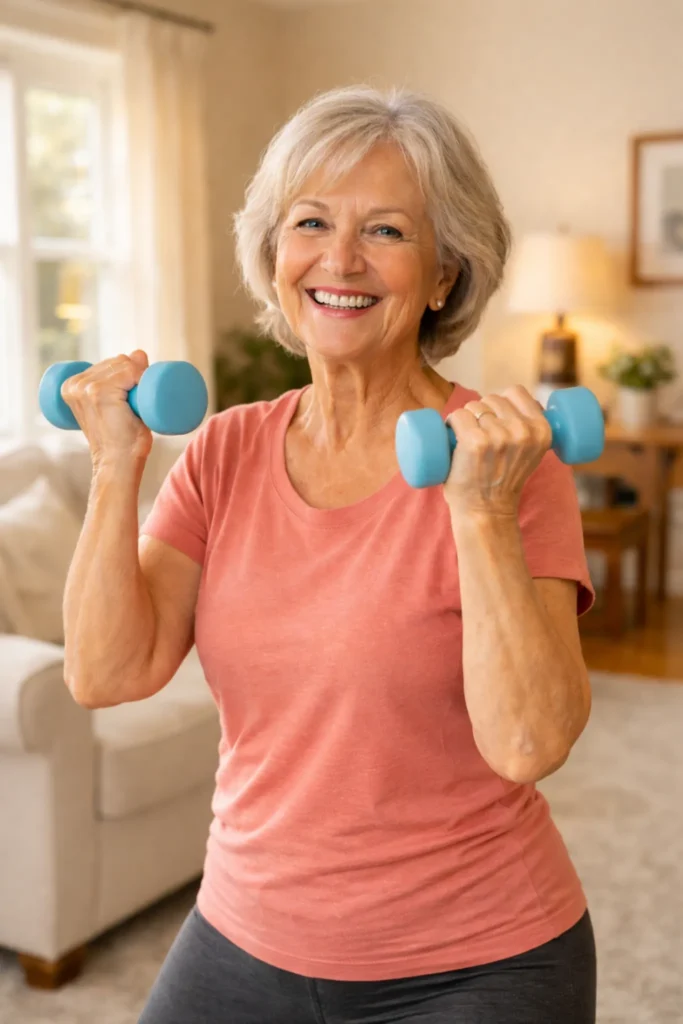
Why Strength Training for Women Over 60 Matters More Than Ever
After age 30, muscle mass gradually declines. After 60, the loss accelerates — a condition often called sarcopenia.
Less muscle can mean:
- Reduced balance
- Slower walking speed
- Increased fall risk
- Greater difficulty rising from chairs
- Less independence
According to the Centers for Disease Control and Prevention, falls are a leading cause of injury-related deaths among older adults.
https://www.cdc.gov/falls/
In the UK, the NHS recommends strength activities at least twice weekly for adults over 65.
https://www.nhs.uk/live-well/exercise/
But strength training for women over 60 isn’t just about preventing falls.
It’s about:
- Carrying groceries without strain
- Gardening without back pain
- Traveling confidently
- Playing with grandchildren
- Living independently
The Emotional Side of Strength
Many women grew up hearing that lifting weights would make them bulky.
Others focused on cardio — walking, cycling, aerobics — believing that was enough.
But strength training for women over 60 is not about bodybuilding.
It’s about dignity.
It’s about being able to:
- Get up from the floor without assistance
- Open stubborn jars
- Climb stairs without gripping the railing
That quiet confidence? That’s muscle.
Is It Safe to Start Strength Training After 60?
Yes — with thoughtful progression.
Research consistently shows that even women in their 70s, 80s, and 90s can build measurable strength improvements.
However, safety comes first.
Before beginning strength training for women over 60:
- Consult your healthcare provider if you have chronic conditions.
- Start with light resistance.
- Focus on proper form over weight.
- Increase gradually.
This article is educational and not medical advice.
Step-by-Step Plan: Strength Training for Women Over 60
Step 1: Start with Bodyweight
For the first 2–3 weeks:
- Chair squats
- Wall push-ups
- Seated leg lifts
- Step-ups on low stairs
Goal: 2 sessions per week.
Keep sessions short (15–20 minutes).
Step 2: Add Light Resistance
Once comfortable:
- 2–5 lb dumbbells
- Resistance bands
- Water bottles (yes, really)
Focus on major muscle groups:
- Legs (squats, step-ups)
- Back (band rows)
- Chest (modified push-ups)
- Arms (bicep curls)
Aim for 8–12 repetitions per movement.
Step 3: Build Consistency
The real secret behind strength training for women over 60 isn’t intensity — it’s consistency.
Two to three sessions per week is enough.
Rest days matter. Muscles grow during recovery.
A Realistic Weekly Plan
Monday: Lower body (squats, step-ups)
Wednesday: Upper body (push-ups, curls, rows)
Friday: Full-body light session
Each session: 20–30 minutes.
That’s it.
Common Fears — And Honest Answers
“I’m too old to start.”
The JAMA Network Open study included women up to 99 years old.
It’s not too late.
“I have arthritis.”
Strength training can actually support joint stability when done correctly. Work with light resistance and controlled motion.
“I don’t want to get bulky.”
After menopause, hormonal changes make large muscle gains unlikely. Most women see improved tone, not bulk.
Nutrition Matters Too
Muscle needs protein.
After 60, many women under-eat protein unintentionally.
General guidance (individual needs vary):
- Include protein at each meal
- Eggs, Greek yogurt, beans, fish, lean poultry
- Stay hydrated
Protein supports muscle repair after strength training for women over 60.
How Strength Training Supports Longevity
The recent JAMA Network Open findings showed an association between greater muscular strength and lower mortality risk.
While association does not equal direct causation, strength likely contributes through:
- Better metabolic health
- Improved balance
- Reduced fall risk
- Faster illness recovery
- Greater physical resilience
Stronger muscles create a stronger body.
What About Cardio?
Walking remains excellent for heart health.
But cardio alone does not fully preserve muscle mass.
The most protective approach combines:
- Strength training for women over 60
- Moderate aerobic activity
- Balance exercises
Think of strength as the foundation.
Warning Signs to Watch
Stop and consult a professional if you experience:
- Sharp joint pain
- Dizziness
- Chest discomfort
- Severe shortness of breath
Progress should feel challenging but controlled.
The Bigger Picture: Independence
When Margaret started lifting 3-pound dumbbells twice per week, she didn’t notice dramatic changes overnight.
But three months later:
- She carried her groceries more easily
- She climbed stairs with confidence
- She felt steadier
Six months later, she traveled again.
Strength training for women over 60 isn’t flashy.
It’s subtle.
It builds quietly.
And over time, it builds freedom.
Long-Term Strategy for Strength Training for Women Over 60
To maintain benefits:
- Keep sessions consistent
- Gradually increase resistance
- Reassess every 3 months
- Include balance training (single-leg stands)
Muscle is “use it or lose it.”
But it is also “train it and keep it.”
Complementing the Eviida News Findings
Our News article explained the science behind muscle strength and longevity in older women.
This Guidance article shows how to apply it.
If you haven’t read the research summary yet, start here:
👉 Read: Muscle Strength Longevity Women – What the New Study Means
Together, these two pieces translate research into real-life action.
Final Encouragement
Strength training for women over 60 is not about chasing youth.
It’s about protecting independence.
It’s about extending vitality.
It’s about showing your body — at any age — that it still matters.
You don’t need a gym membership.
You don’t need heavy weights.
You don’t need perfection.
You need consistency.
And maybe two small dumbbells.
Educational content only. Not medical advice. Always consult a healthcare professional before beginning new exercise programs.
