
Teen Sleep Deprivation Crisis Is Getting Worse—Here’s What the Latest Research Shows
A growing teen sleep deprivation crisis is raising urgent concerns for families across the United States—and increasingly, the United Kingdom. A new study published in JAMA highlights a troubling pattern: more adolescents are not getting enough sleep, and the consequences are far more serious than many realize.
👉 Read the official study: https://jamanetwork.com/journals/jama/fullarticle/
This isn’t just about feeling tired. Researchers are linking sleep loss to mental health struggles, risky behaviors, and long-term health risks—making this a critical issue for parents, schools, and policymakers.
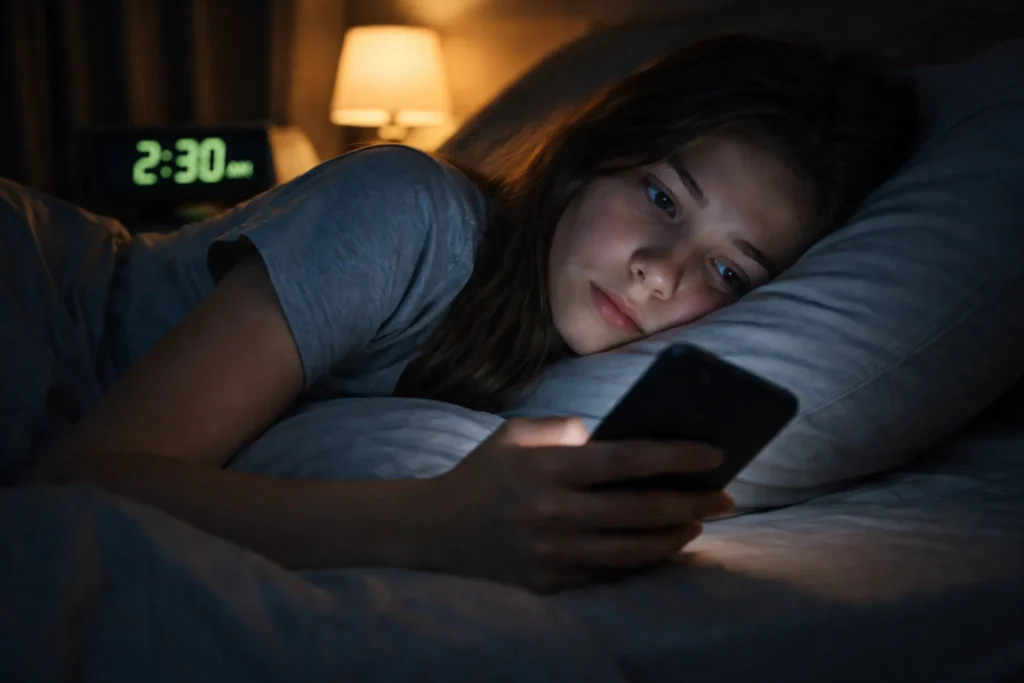
What the Study Found About the Teen Sleep Deprivation Crisis
The latest findings show a clear upward trend in sleep deprivation among US adolescents, especially across groups already at higher behavioral risk.
Key findings include:
- A significant percentage of teens are sleeping less than the recommended 8–10 hours per night
- Sleep deprivation is more common among teens with higher stress, substance use, or mental health challenges
- The gap is widening between well-rested teens and those chronically sleep-deprived
In short, the teen sleep deprivation crisis is not evenly distributed—it’s hitting vulnerable groups the hardest.
This pattern reflects broader lifestyle shifts in modern adolescence, from increased screen exposure to academic pressure.
Why Teens Are Sleeping Less Than Ever
Understanding the teen sleep deprivation crisis starts with looking at what’s changed in daily life.
1. Screen Time and Late-Night Device Use
Smartphones, social media, and streaming platforms are major disruptors. Many teens stay up late scrolling or watching content, delaying sleep and reducing total rest time.
Blue light exposure also interferes with the body’s natural sleep cycle, making it harder to fall asleep—even after devices are turned off.
2. Academic and Social Pressure
In both the US and UK, teens face increasing pressure to perform—academically, socially, and even digitally.
- Homework loads are heavier
- College or university competition is intense
- Social expectations never “switch off” due to constant connectivity
This creates a cycle where sleep becomes the first thing sacrificed.
3. Biological Sleep Shifts
Teenagers naturally experience a shift in their internal clock, making them feel more alert at night.
But early school start times—especially in the US—force them to wake up before their bodies are ready.
This mismatch contributes directly to the teen sleep deprivation crisis.
4. Mental Health Struggles
Anxiety, stress, and depression are closely linked with poor sleep.
According to public health data from the CDC:
👉 https://www.cdc.gov/sleep
And guidance from the NHS:
👉 https://www.nhs.uk/conditions/insomnia/
Mental health challenges can both cause and worsen sleep deprivation, creating a harmful feedback loop.
Health Risks Linked to the Teen Sleep Deprivation Crisis
Sleep isn’t optional—it’s essential for development. The risks associated with chronic sleep deprivation go far beyond tired mornings.
Mental Health Risks
- Increased risk of anxiety and depression
- Emotional instability and mood swings
- Reduced ability to cope with stress
Behavioral Risks
The study found strong associations between sleep deprivation and:
- Risk-taking behaviors
- Substance use
- Poor decision-making
Sleep-deprived teens are more likely to engage in behaviors that can have lasting consequences.
Physical Health Risks
Long-term sleep deprivation is linked to:
- Weakened immune function
- Weight gain and metabolic issues
- Higher risk of chronic diseases later in life
This makes the teen sleep deprivation crisis a long-term public health concern—not just a short-term lifestyle issue.
Why This Matters Right Now for US and UK Families
The timing of this research is critical.
In the United States
The teen sleep deprivation crisis is intersecting with:
- Rising teen mental health concerns
- Increased digital dependency
- Ongoing debates about school start times
Parents are being asked to manage a problem that is partly structural—and not entirely within their control.
In the United Kingdom
While patterns are similar, UK teens face:
- Exam-focused academic pressure (GCSEs, A-levels)
- Growing screen use trends
- Increasing awareness of youth mental health challenges
This means the teen sleep deprivation crisis is not isolated—it’s part of a global shift in adolescent lifestyle.
What Families Can Do Next
While the problem is complex, awareness is the first step.
Small changes can make a meaningful difference:
- Setting consistent sleep schedules
- Limiting screen use before bedtime
- Creating a calming nighttime routine
- Talking openly about stress and mental health
For a complete, practical step-by-step guide, read:
👉 https://eviida.com/how-to-fix-teen-sleep-schedule/
The Bigger Picture: A Wake-Up Call for Society
The teen sleep deprivation crisis is more than a personal issue—it’s a societal one.
It reflects how modern life is reshaping childhood and adolescence:
- Technology is always on
- Expectations are always high
- Rest is often undervalued
This study serves as a clear warning: without action, the long-term health impact could be significant.
Final Thoughts
The teen sleep deprivation crisis is no longer a hidden issue—it’s a growing reality backed by evidence.
For parents, educators, and teens themselves, the message is clear:
Sleep is not a luxury. It’s a foundation for health, decision-making, and emotional stability.
Addressing this crisis now could shape a healthier future for the next generation—both in the US and the UK.
Disclaimer: This content is for educational purposes only and is not medical advice.
